



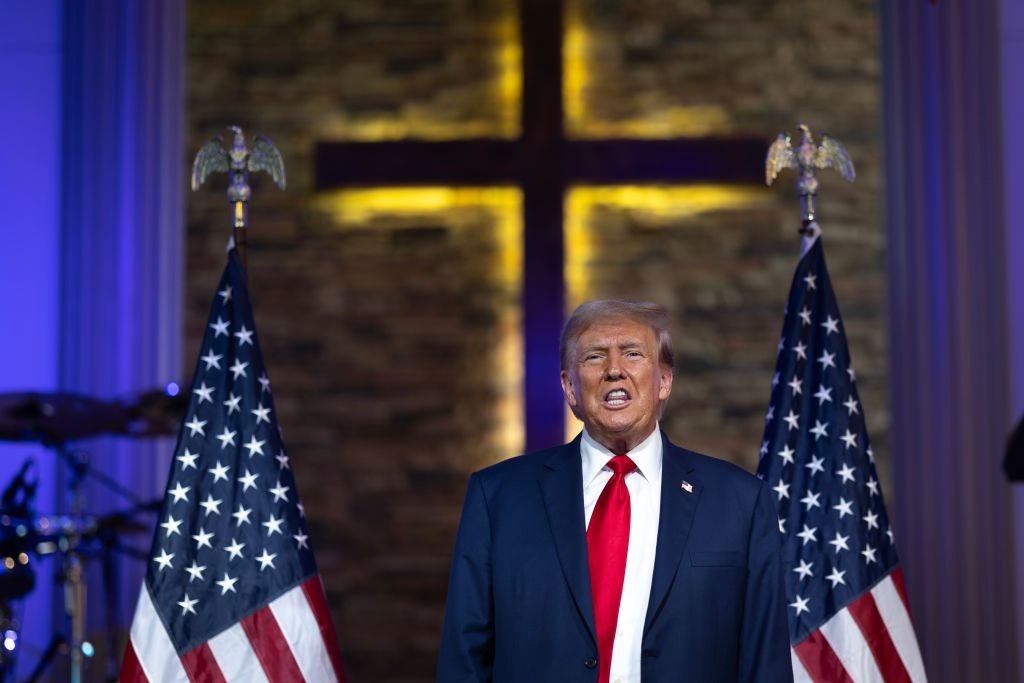
On Friday, the White House X account criticized religious persecution abroad, particularly focusing on the killings of Christians by Islamist militias in Nigeria. The post positioned the U.S. as a defender of Christians worldwide, suggesting a Christian nationalist perspective rather than a purely racial one. This contrasts with the common portrayal of Trump’s ideology as primarily white supremacist, which emphasizes racial dominance.
While white supremacy prioritizes race, Christian nationalism melds political and religious objectives, seeking to protect Christianity. Trump’s previous comments, including statements about Armenian Christians and addressing the UN about global Christian persecution, further illustrate this viewpoint.
Despite his aggressive border policies facing criticism for being racist, Trump’s focus on protecting non-white Christians complicates the narrative around his ideology, suggesting a blend of religious solidarity over racial identity. The article argues that Trump’s actions and rhetoric demonstrate a global concern for persecuted Christians, challenging anti-racist movements to expand their focus beyond race to include religious persecution as well.
Ultimately, Trump’s ideology is framed more accurately as Christian nationalism, which aims to uphold America’s Anglo-Protestant heritage, rather than a simplistic association with white supremacy. Mislabeling him as such might obscure significant global issues, including the struggles faced by non-white Christians.
