



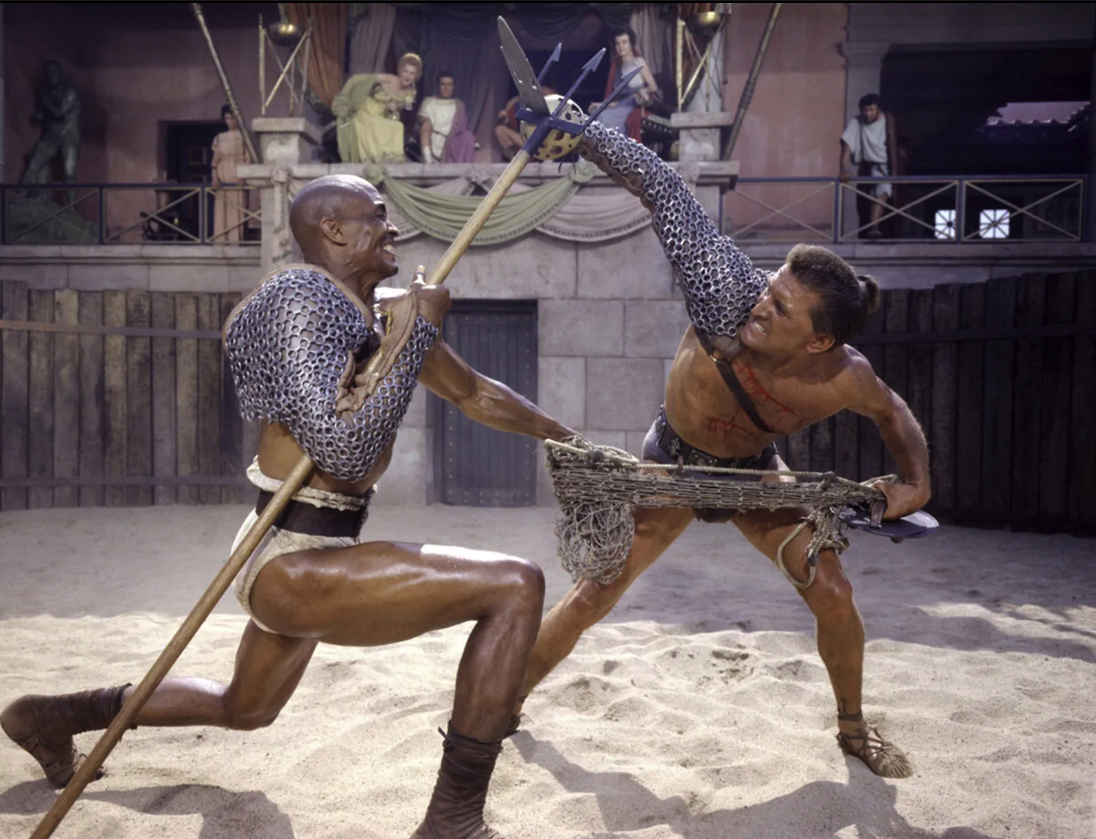
The article discusses an intriguing cultural phenomenon: the fascination many men have with the Roman Empire, often framed as a meme that mingles humor with deeper cultural reflection. Classics professor Curtis Dozier, who explores this in his book The White Pedestal, reveals that this interest can become politically charged, particularly when white nationalists draw from ancient Greece and Rome to justify their ideologies.
Dozier’s work uncovers how mainstream cultural narratives surrounding ancient history can perpetuate hierarchical and exclusionary ideas, often unnoticed. He differentiates between white nationalism—an explicit political movement seeking to preserve power for white people—and white supremacy, which refers to the broader systemic inequalities ingrained in society. This distinction highlights the danger of assuming racism is only present in overt factions, while ignoring how deeply entrenched ideas can influence societal norms.
His analysis includes the way ancient texts are curated to omit contrasting messages, allowing for interpretations that support white nationalist views. For instance, while Athens is celebrated as the birthplace of democracy, its practices often excluded women and enslaved people.
Dozier also critiques the rhetoric of societal decline, a narrative common across political spectrums, which can foster authoritarian tendencies. Instead of framing discussions around decline, he advocates for a perspective centered on choice and contingency to avoid perpetuating harmful ideologies.
Ultimately, Dozier emphasizes that the classics should not be abandoned but read with a critical lens. Acknowledging how ancient texts have historically justified violence and inequality can pave the way for a more ethical study of these subjects. By dismantling the pedestal on which these ancient cultures are placed, scholars can examine them more responsibly and ethically.
In conclusion, the article posits that our cultural preoccupations with the Roman Empire prompt deeper inquiries into why we idolize these ancient civilizations and how this affects contemporary societal attitudes.
