


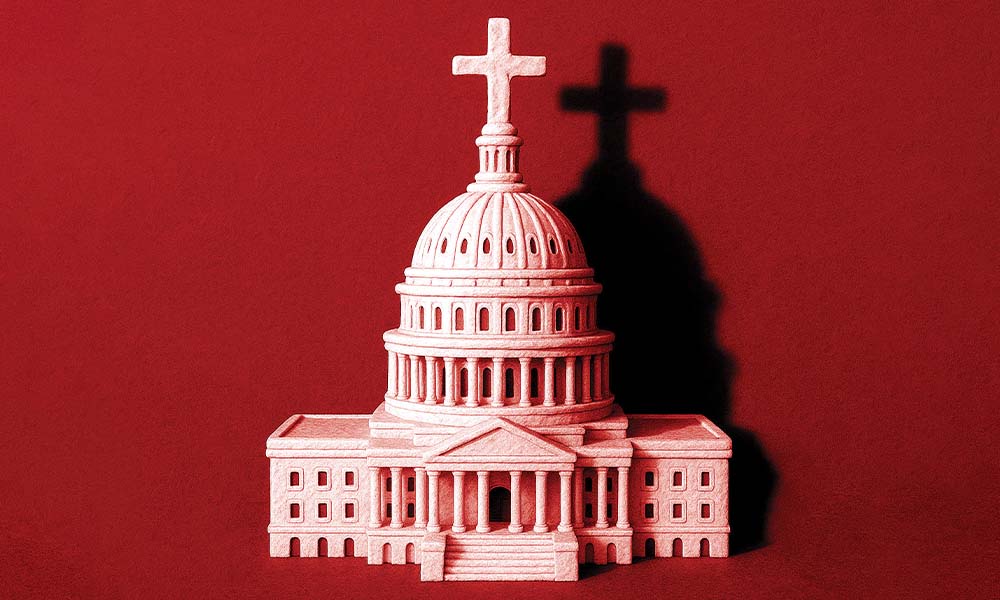
In July 2024, the political landscape in the U.S. was marked by President Joe Biden’s struggle for reelection amid a divisive atmosphere. He asserted a commitment to defending democracies at a NATO meeting, while Donald Trump secured the Republican nomination with a more moderate GOP platform. Less highlighted was a significant “National Conservatism” conference in Washington, D.C., which showcased a growing strain of conservative thought promoting America’s white European and Christian heritage.
Key figures included Senators Josh Hawley and JD Vance, with Hawley openly aligning with “Christian nationalism,” which seeks to entwine religion with governance. Prominent speakers, such as Douglas Wilson and supporters of Project 2025, called for increased Christian influence in government and espoused ideas viewed as inherently exclusionary towards non-Christians.
The conference foreshadowed the potential for a radical shift in U.S. governance under a second Trump term, including promises to establish explicitly Christian governments. Wilson, who advocates for Christian dominionism, outlined plans for a societal order aligned with biblical authority, while Stephen Wolfe took a controversial stance advocating for political discrimination against non-Christians.
Despite the increased visibility of Christian nationalism, some conservative Jews, led by figures like Yoram Hazony, endorsed the movement, arguing for a connection between Jewish and Christian conservatives against common threats. However, tension arose as rising antisemitic sentiments emerged within some Christian nationalist rhetoric, leading to unease among Jewish supporters at events celebrating a shared agenda with Trump and his administration.
Events like the assassination of activist Charlie Kirk solidified the narrative of cultural war amongst conservative Christians. Trump’s approach focused on combating perceived anti-Christian bias while simultaneously addressing antisemitism primarily within leftist movements, leaving his administration’s own problematic elements largely overlooked.
By late 2025, Trump’s administration was dismantling previous structures in federal governance, leveraging both Christian nationalism and traditional conservatism. The alliances formed between Jewish and Christian conservatives faced scrutiny, particularly as antisemitic rhetoric gained traction among some within the movement. Hazony and others acknowledged growing concerns about antisemitism arising unexpectedly on the right, complicating an already volatile political and social climate marked by a mix of jingoism and religious nationalism.
This evolving landscape underscored significant apprehensions regarding the implications of a political order defined by Theocratic nationalism, dominionism, and a rejection of pluralism, particularly for Jewish communities who historically thrived under more inclusive democratic ideals.
