



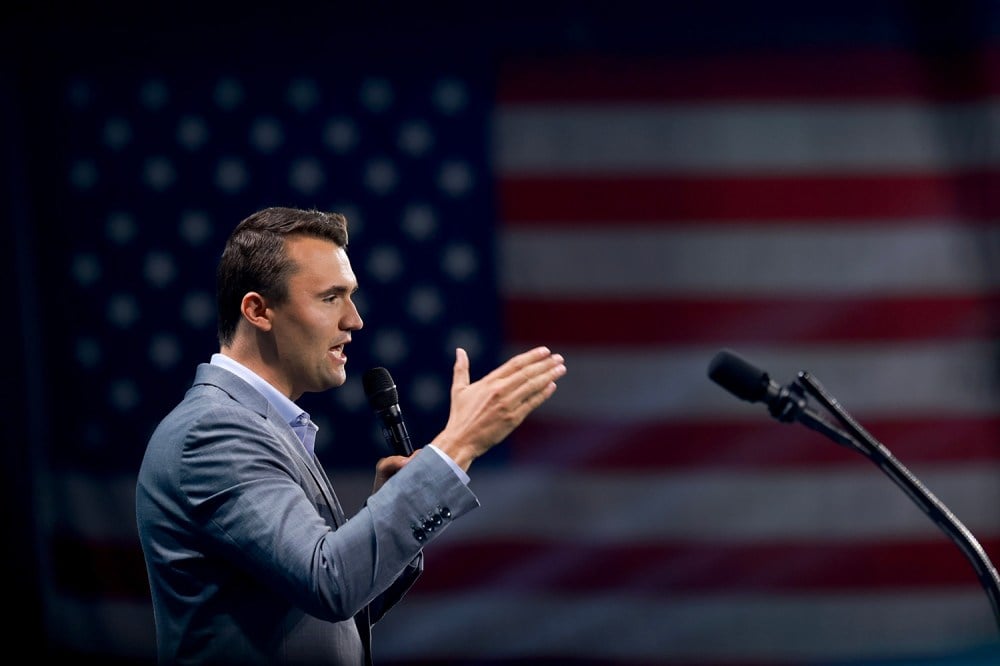
Just days before his death, Charlie Kirk embarked on a speaking tour in Asia, visiting South Korea and Japan. At a Christian youth event in Seoul, he claimed a global conservative movement among young men and boasted about his role in Trump’s victory. In Tokyo, he spoke at a symposium hosted by Japan’s nationalist Sanseito party, expressing concerns about a “silent invasion” and praising Japan’s social order. His outreach highlighted the alignment of American and Asian far-right forces.
Kirk’s rhetoric, rooted in American culture wars—Christian grievances, anti-immigration stances, and opposition to feminism—found resonance among majority groups in non-white nations facing cultural insecurities. His messages of lost greatness and threatened masculinity connected with global anxieties, revealing that his white grievance politics were not solely confined to the U.S.
After his death, Kirk was transformed into a martyr for illiberal movements worldwide, uniting disparate groups against pluralism and gender equality. This emergence of a “right-wing international” echoes historical leftist movements but adapts to current digital networks, showcasing how global right-wing sentiments are shared among various nationalist movements.
Kirk’s martyrdom resounds universally, akin to figures like Che Guevara, offering a symbol against liberalism. The article explores how illiberal movements emphasize majoritarianism and patriarchal order and identifies three main families of such movements: Christian nationalism, civilizational nationalism, and non-Christian religious nationalism.
To counter this rising illiberalism, liberal democracies must reframe their narratives to resonate emotionally, establish cross-border alliances, address root grievances, and defend the digital space. The urgency is underscored by the need to respond to evolving radicalization that blends various ideologies.
Kirk’s globalization illustrates the far-right’s growing influence, posing a significant threat to liberal modernity. The potential flickers of fascism, though not in their historical form, remain a danger that demands vigilance and an effective counter-response from democracies.
