


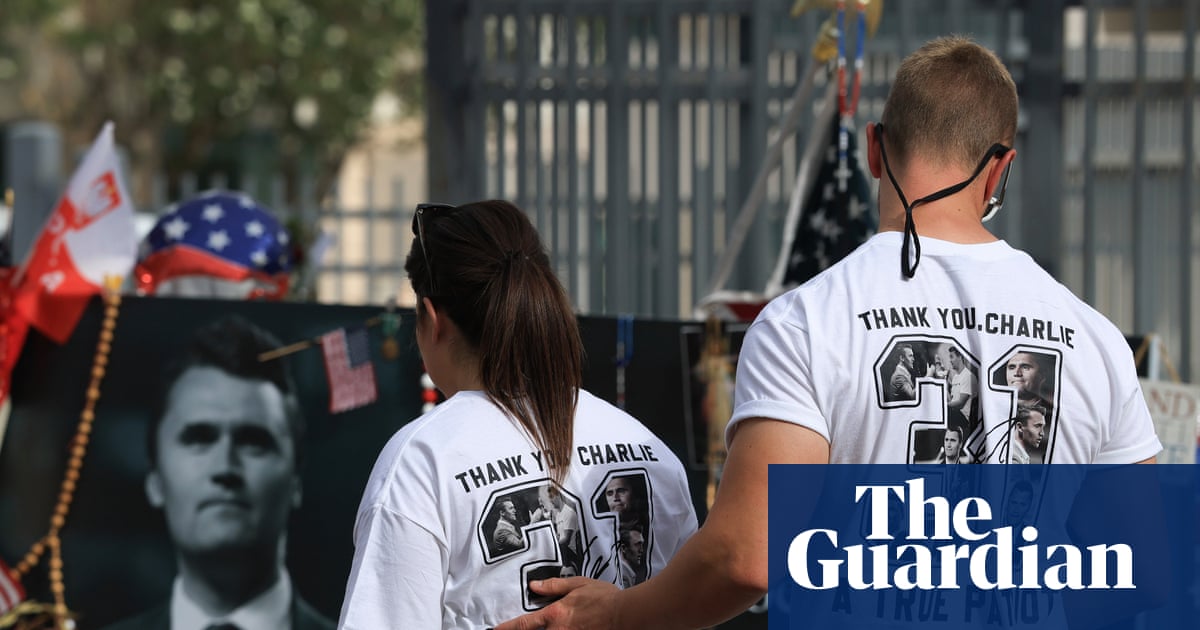
The article discusses the rise of Christian nationalism in the U.S., particularly focusing on Charlie Kirk’s positioning as a martyr for this movement after his death. His widow, Erika Kirk, described the world’s evil in the wake of his killing, framing her grief as a powerful call to action. Analysts like Jeff Sharlet interpret her words as indicative of a holy war mentality.
Kirk, known for his political activism, became increasingly associated with Christian nationalist ideas, especially during Donald Trump’s presidency. His organization, Turning Point USA, shifted from promoting free-market principles to embracing aggressive religious ideologies, influenced by a far-right movement known as the New Apostolic Reformation (NAR). This ideology advocates for Christians to dominate various societal spheres through the “seven mountains mandate”—a concept encouraging Christians to gain control over key societal sectors, often dismissing democratic means if necessary.
Kirk’s evolution reflected a broader trend where the Christian right sought stronger, more militant leaders after feeling marginalized during the Obama administration. This sentiment led to a diverse coalition, blending elements from various streams of Christian nationalism, including radical traditionalist Catholics and a more militant reformed Protestantism.
Despite his fondness for jingoism and political might, Kirk’s rhetoric also appealed to those outside traditional Christian circles, making aspects of Christian nationalism attractive to a range of conservative Americans. Ultimately, the article portrays Kirk’s legacy as intertwining the church with political extremism, as he popularized ideas that blurred the lines between faith and theocratic ambitions, posing risks to democratic values.
