



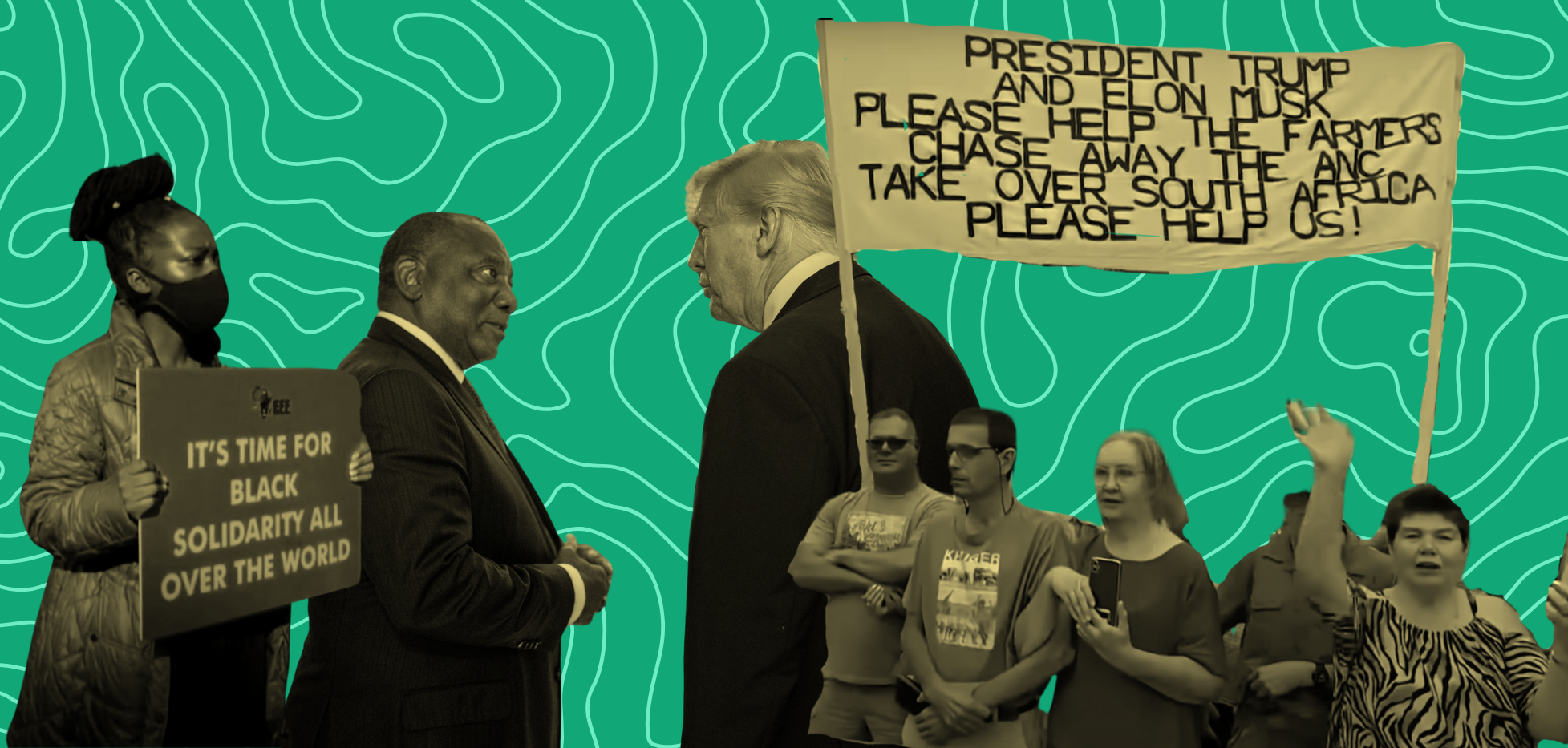
The article discusses Donald Trump’s controversial claims regarding alleged discrimination faced by white farmers in South Africa, which he referred to as a form of “white genocide.” It highlights inaccuracies in Trump’s statements, particularly those suggesting this phenomenon has led to violence against white farmers in South Africa. Instead, some of the images he used were misattributed and originated from unrelated events in Congo.
The situation escalated during discussions between Trump and South African President Cyril Ramaphosa, where trade agreements were overshadowed by these assertions. The article also touches upon the broader implications of Trump’s rhetoric, linking it to white supremacy and jingoism, suggesting these claims resonate with certain segments of American society that feel threatened by demographic changes.
Trump’s administration introduced policies that positioned the U.S. as a refuge for white South Africans claiming discrimination, sparking debates over race and immigration within the context of dominionism and Religious nationalism. The piece examines historical narratives surrounding white refugees and the shifting dynamics of American immigration policy amid rising xenophobia and systemic racism.
Overall, the article emphasizes how Trump’s rhetoric is part of a larger narrative that conflates racial concerns with national identity and political power, thereby fostering a climate of division and misunderstanding about race relations in both America and South Africa.
