



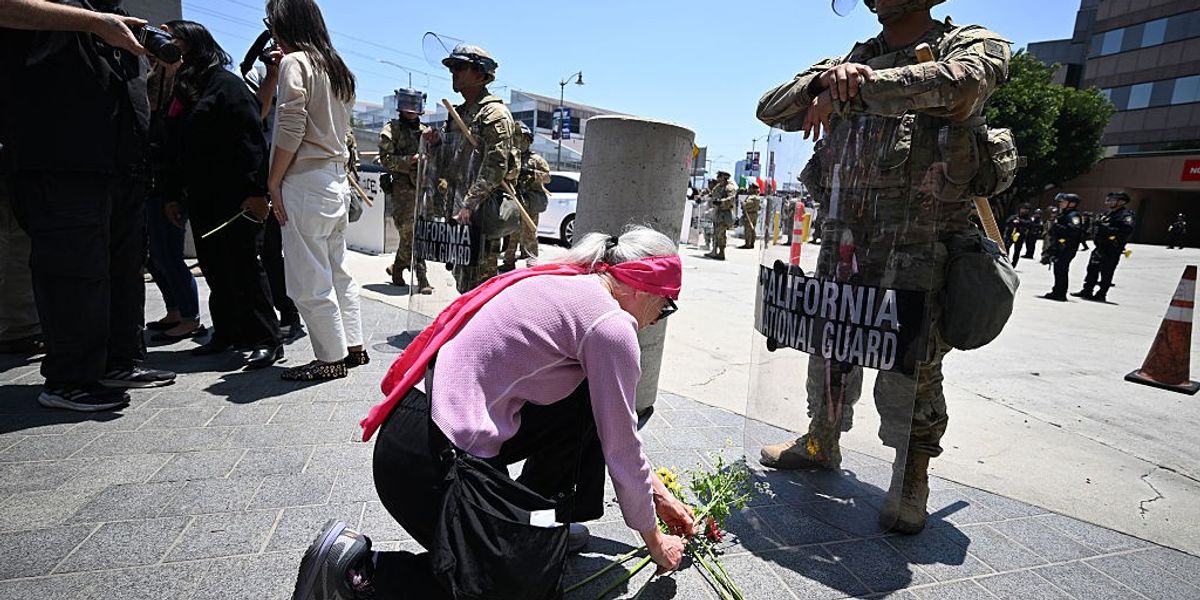
The author reflects on a journey towards understanding nonviolence, highlighting it as a global movement opposing the intertwining of religion and empire. In today’s world, religious nationalism manifests in various forms—from Hindu majoritarianism to Christian nationalism—and often justifies violence. This dynamic equates faith with national identity, branding dissent as heresy and portraying violence as divinely justified.
The piece emphasizes that this is not true faith, but idolatry, revealing how political forces manipulate spiritual aspirations for power. The consequences are dire, seen in global conflicts and social unrest. Yet, there are those who resist this weaponization of spirituality and reclaim a deeper, nonviolent understanding of faith.
Historical prophets like Jesus and Gandhi exemplify resistance rooted in love and truth, standing against oppressive empires. The author calls for a robust, spiritually grounded movement uniting diverse perspectives against extremism and moral apathy. Real change requires solidarity across religious and ideological lines, with examples of resistance already emerging worldwide.
Despite the challenges, the author argues that nonviolence is not a form of weakness, but a powerful moral stance. Reclaiming God from oppressive narratives is an urgent task, necessitating a collective commitment to dignity and justice for all. The closing question urges readers to choose between nonviolence or existence, echoing the paths taken by figures like Gandhi and Martin Luther King Jr. in their fight against oppression.
