



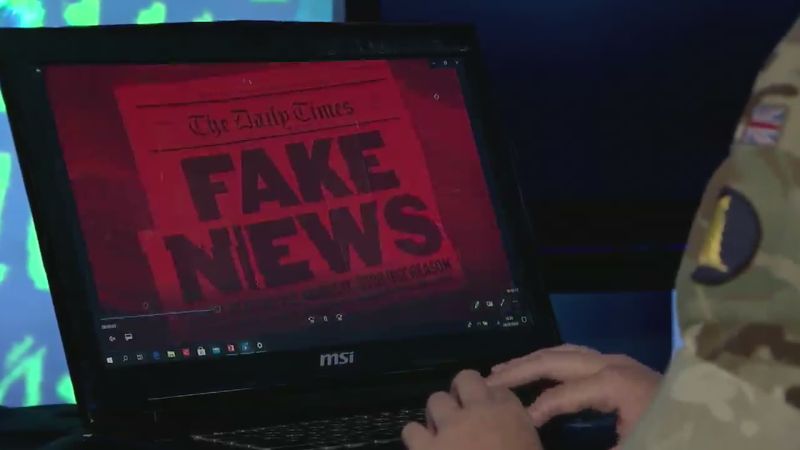
The article discusses the role of disinformation and fake news in modern warfare, especially in the context of “grey zone warfare” where hostile states manipulate information to influence public perception. This phenomenon has been amplified by social media, making it easier for states to spread lies that create confusion and alter reality.
A key example highlighted is the alleged connection between Iranian accounts posing as Scottish nationalists and the US military strikes on Iran, suggesting state-sponsored deception aimed at destabilizing the UK. The article cites Moldova as a case study, where disinformation tactics, including deepfakes and AI-generated content, are employed at an industrial scale, presumably orchestrated by Russia.
In the UK, incidents like a deepfake involving London Mayor Sadiq Khan illustrate the potential for disinformation to incite unrest and fear, despite real crime statistics indicating a decline. The article emphasizes that while authoritarian states like Russia exploit existing social fractures, Western governments struggle to counteract this disinformation effectively. It concludes with a reminder for consumers of information to critically evaluate sources and motivations behind content, as likes and shares become valuable targets in information warfare.
