



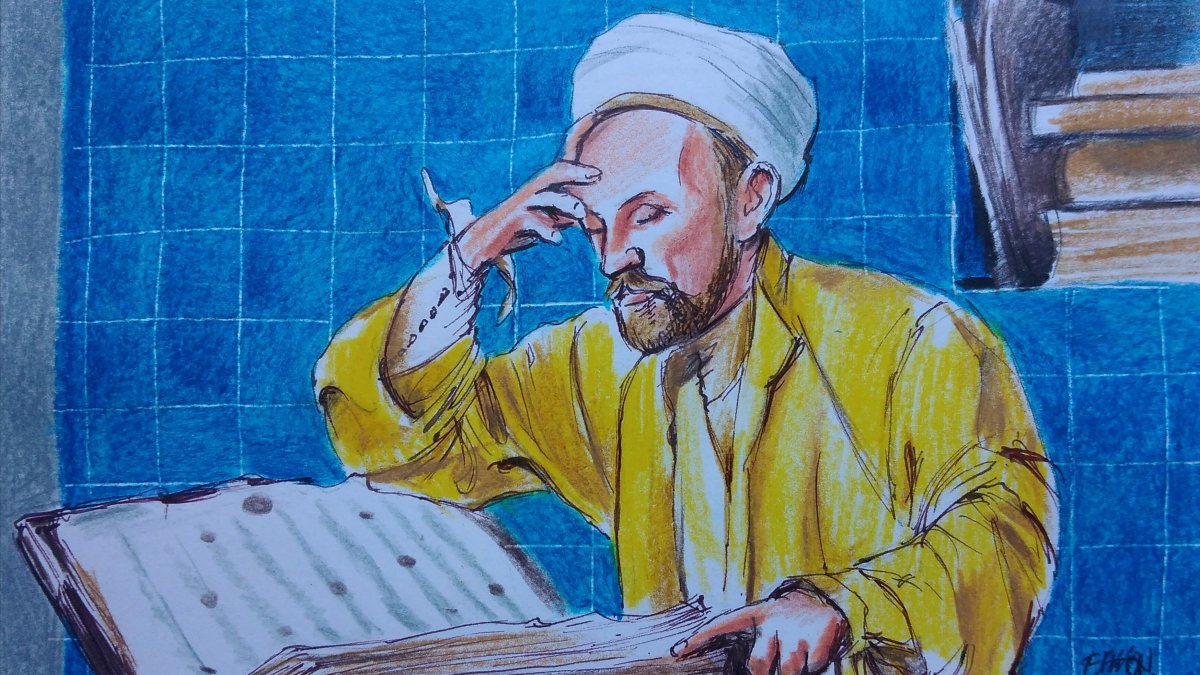
Al-Ghazali, a pivotal figure in Islamic scholarly history, is often misrepresented as opposing scientific thought, particularly regarding causality, which is linked to claims of scientific stagnation in the Islamic world post his era. Frank Griffel, in his article “The Western Reception of al-Ghazali’s Cosmology from the Middle Ages to the 21st Century,” evaluates this perception and its evolution in Western interpretations of al-Ghazali’s works.
Griffel argues that Western scholars, influenced by Orientalist perspectives, portray the Islamic world as stagnant, akin to medieval Europe, particularly after Napoleon’s invasion of Egypt, which sparked the rise of Orientalist studies. Central to this narrative is Ernest Renan, who portrayed al-Ghazali as an enemy of philosophical thought, emphasizing his critique of causality. This view, however, arose from a misinterpretation through Ibn Rushd’s lens, where al-Ghazali is depicted as anti-science.
Griffel examines al-Ghazali’s alignment with the Ash‘arite school, specifically its concept of occasionalism, where causality is seen as a result of God’s will rather than fixed laws. He notes a shift in interpretation starting with Solomon Munk and later William H. T. Gairdner, who pointed out inconsistencies in al-Ghazali’s works regarding causality. Gairdner argued that al-Ghazali acknowledged causality in some texts while rejecting it in others, leading to debates about his intellectual consistency.
Subsequent scholars, including Richard M. Frank and Michael E. Marmura, challenged the notion of dual doctrines in al-Ghazali’s works, emphasizing a coherent metaphysical understanding instead. Griffel suggests that al-Ghazali’s dual approach reflects a deeper intellectual tradition that recognizes multiple methodologies leading to the same truths.
He concludes that the Orientalist narrative simplifies the complexities of al-Ghazali’s contributions and the broader Islamic intellectual context, reducing them to Western perceptions. This misrepresentation serves imperialistic aims, as the East is portrayed in a way that aligns with Western narratives, often ignoring its historical and intellectual realities. Griffel’s work highlights the need to understand al-Ghazali within his own context, challenging the dominant Orientalist discourse.
