



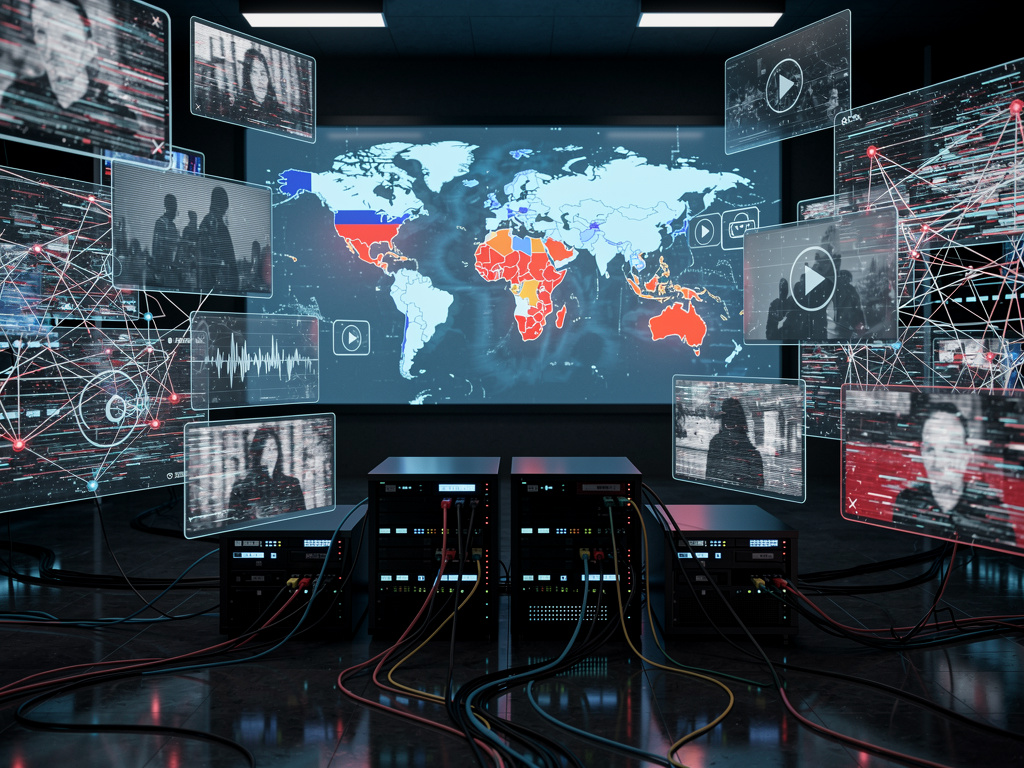
The Fog of Digital War: Disinformation’s Onslaught Following Maduro’s Dramatic Capture
On January 3, 2026, President Donald Trump announced the capture of Venezuelan President Nicolás Maduro and his wife in a swift U.S. military operation. This unprecedented event sent shockwaves globally and incited a flurry of activity on social media platforms. Amid genuine reports, a barrage of disinformation quickly emerged, revealing the vulnerabilities of our interconnected digital landscape.
False narratives proliferated alongside official accounts; old footage and AI-generated images misrepresented events, creating significant confusion. Reports highlighted that this disinformation surge began almost immediately after Trump’s announcement, with misleading content spreading rapidly due to reduced moderation from major tech companies that have downsized fact-checking efforts in recent years.
The capture, arising from longstanding U.S. charges against Maduro for narco-terrorism and corruption, marked a historic escalation in U.S. foreign policy. However, unverified claims of civilian casualties circulated, exacerbating public distrust.
Several factors contributed to this disinformation wave:
- Lack of Moderation: Major tech platforms have reduced their content moderation teams, allowing for unchecked misinformation to spread widely.
- AI Connectivity: Generative AI tools enabled users to create realistic fakes, blurring the lines between fact and fiction, which further spread distrust in credible news reports.
- Geopolitical Motivations: Different narratives emerged, with pro-Maduro accounts branding the capture as imperialistic, while others celebrated it as liberation.
This phenomenon isn’t new; similar disinformation surges have occurred during crises like the 2020 U.S. election and the early days of the Ukraine conflict. User behavior, driven by emotional reactions, also contributed to rapid sharing of unverified content.
The fallout extends to global diplomacy, where calls for Maduro’s return and discussions of U.S. involvement raise tensions in Latin America. Disinformation not only distorts real-world events but also impacts public sentiment and political discourse.
Efforts to combat this issue are emerging, albeit inconsistently. Some platforms have started using AI detection tools, while experts advocate for a combination of tech and human oversight in moderation. As misinformation threatens public discourse, the need for cross-border cooperation in addressing digital threats has been highlighted.
The episode underlines the fragility of information ecosystems and the necessity for systemic changes in social media practices. Future strategies might include blockchain for content verification and peer-driven education campaigns to help users discern authenticity in the digital age.
In conclusion, as discussions around Maduro’s capture unfold, rebuilding trust in online information sources remains crucial. The incident serves as a critical reminder of the need for collaboration among tech companies, governments, and other stakeholders to combat disinformation in increasingly volatile global contexts.
