



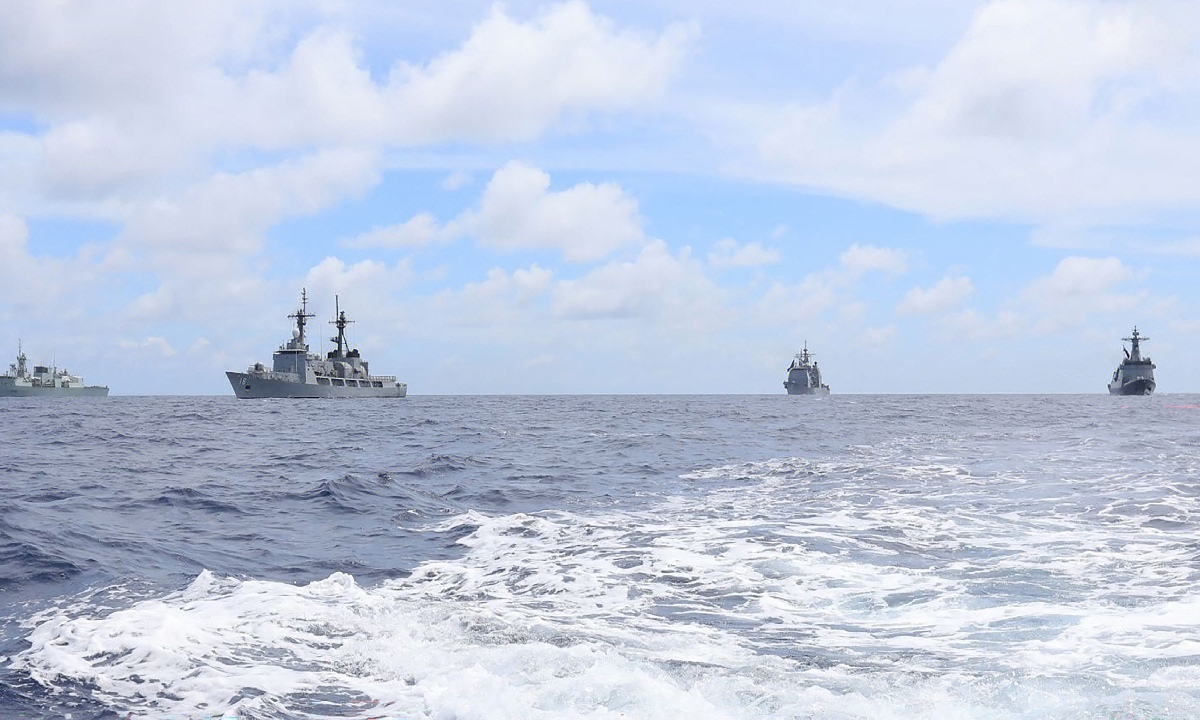
The article discusses the evolving dynamics in the South China Sea, particularly focusing on the role of the United States, Canada, Australia, and the Philippines in regional tensions. After World War II, the international community recognized China’s sovereignty in the area, which China has worked to maintain through commitments like the 2002 Declaration on the Conduct of Parties in the South China Sea with ASEAN nations.
However, since the 1990s, particularly during the “pivot to Asia” strategy of the 2010s, US involvement has escalated, fostering instability. The article outlines US tactics, including cognitive and opinion warfare aimed at undermining China’s regional relationships and promoting an arms race. The US has promoted narratives that portray China as trying to dominate the region, labeling its defensive actions as aggressive.
A report from the Xinhua Institute details how the US and its allies have utilized mischaracterizations and propaganda to create a negative perception of China, including the use of misleading information and the support of regional provocateurs, such as the Philippines, which has adopted strategies to depict China as a regional bully. Western media has also been implicated in amplifying these narratives through collaboration with claimant states involved in confrontations against China.
