



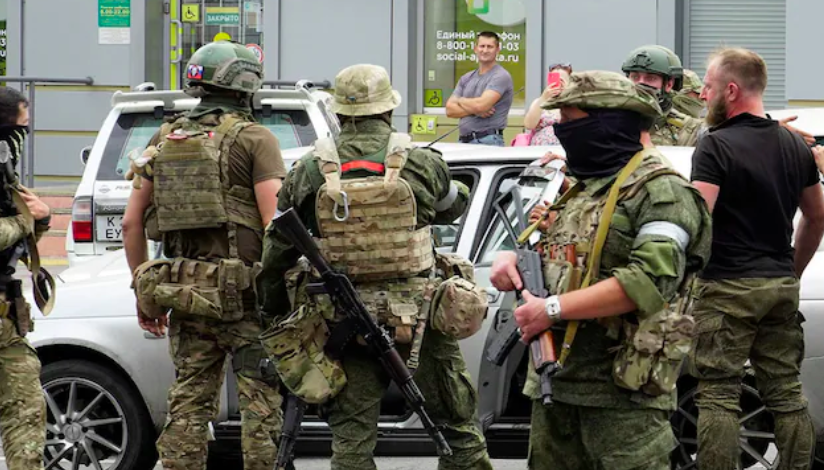
Russia’s SVR foreign intelligence agency has assumed control of the Wagner Group’s influence operations in Africa following the death of its founder, Yevgeny Prigozhin. Wagner, known for its violent tactics, had a significant presence on the continent, supporting governments in nations like Libya and Mali while executing extensive disinformation and destabilization campaigns.
After Prigozhin’s death in a 2023 plane crash post-mutiny, the Russian defense ministry sought to replace Wagner with a new group called the Africa Corps. However, the SVR has now taken charge of Wagner’s influence operations, which include promoting Moscow’s political and economic interests, spreading disinformation, and undermining competition.
An investigation by a consortium of media outlets revealed that around 100 consultants work for Wagner’s influence branch, Africa Politology. Between 2024 and 2025, teams were deployed in multiple countries, including Angola, Argentina, and Libya. The SVR’s operations incorporate intelligence gathering, recruitment, and establishing key influencers in strategic positions.
The investigation was sparked by leaked documents detailing the SVR’s strategies and activities from January to November 2024. These documents revealed that the SVR’s influence strategies go beyond traditional practices in political and military contexts. Coordination between the SVR and the Russian defense ministry varies by region, particularly in the Central African Republic.
Research highlighted the SVR’s robust involvement across Africa, particularly in Mali, where it provides intelligence on Western military and political activities. Following coups in several countries, Mali, Burkina Faso, and Niger have distanced themselves from France, opting for closer ties with Russia and forming a new political union.
Despite a budget of nearly $7.3 million for influence operations between January and October 2024, the effectiveness of Russia’s efforts remains questionable, as tangible benefits from these initiatives have been slow to arise. The investigation reveals a complex network of funding and lobbying aimed at reshaping political landscapes in unstable African regions.
