



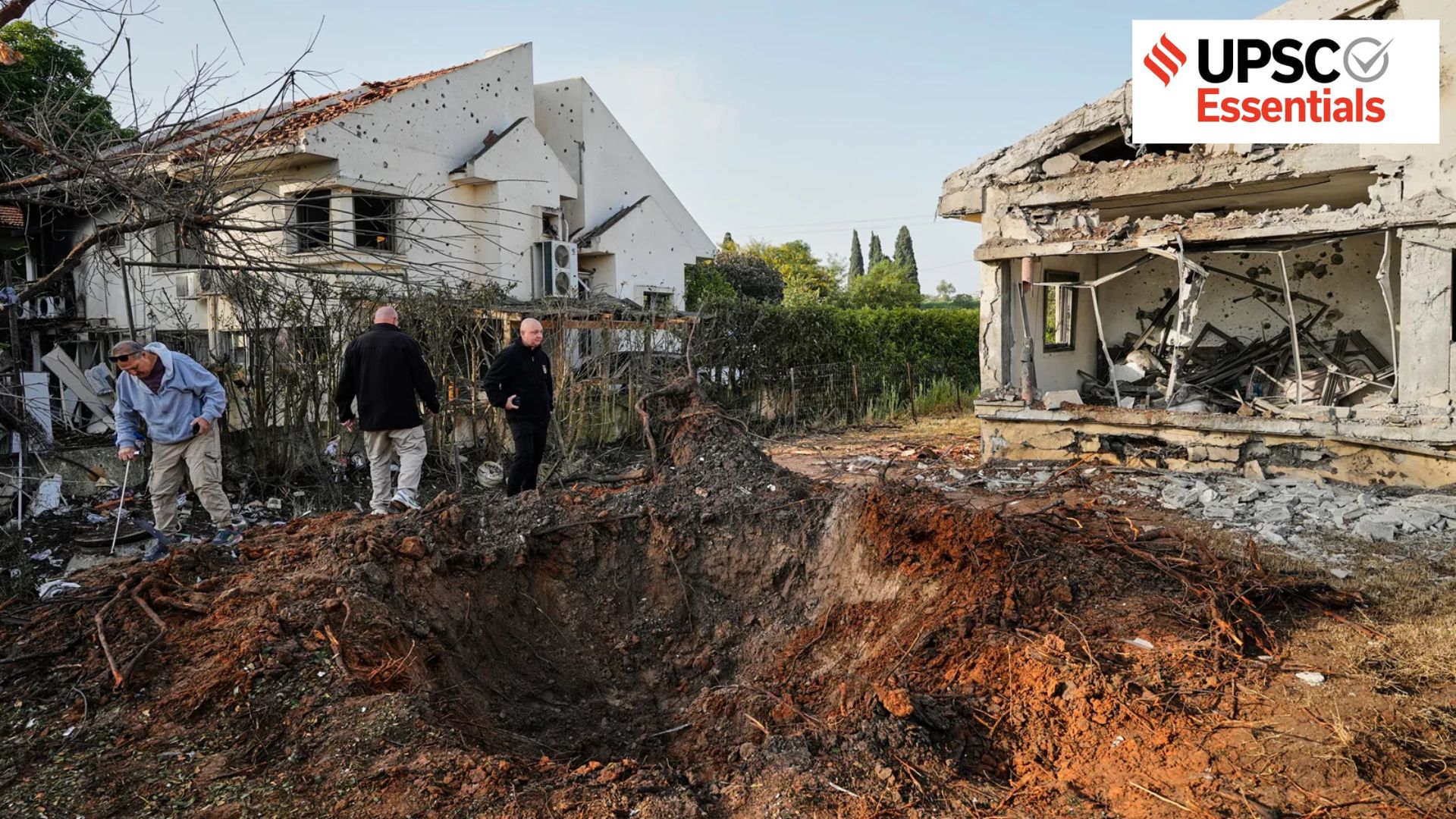
The article discusses the ongoing conflict in West Asia, emphasizing Iran’s conditions to end its war with Israel and the U.S. It explores how this war has intensified anti-U.S. sentiments and highlighted issues of identity and allegiance among nations. Experts note that the crisis fosters narratives of shared identity and solidarity, illustrating nationalism’s relevance in shaping both domestic and international relations.
Nationalism, defined as a powerful ideological force arising from notions of identity, culture, and allegiance, is examined through the works of several scholars. Eric Hobsbawm’s concept of “invented tradition” describes how practices and symbols are created to instill specific values, while Liah Greenfeld and Ernest Gellner investigate nationalism’s evolution and necessity in modern society, critiquing its Eurocentric perspectives.
Partha Chatterjee analyzes nationalism in the Indian context, portraying it as a “derivative discourse” that balances Western acknowledgment of material superiority with cultural independence. The article also highlights how literature reflects and interrogates national identity, featuring significant contributions from authors like Rabindranath Tagore, Qurratulain Hyder, Salman Rushdie, and Amitav Ghosh. Their works explore nationalism’s complexity, inclusivity, and the impact of events like Partition.
Overall, the article posits that contemporary geopolitical conflicts revive debates around nationalism and identity, emphasizing how literature shapes these discussions through diverse perspectives and narratives.
