



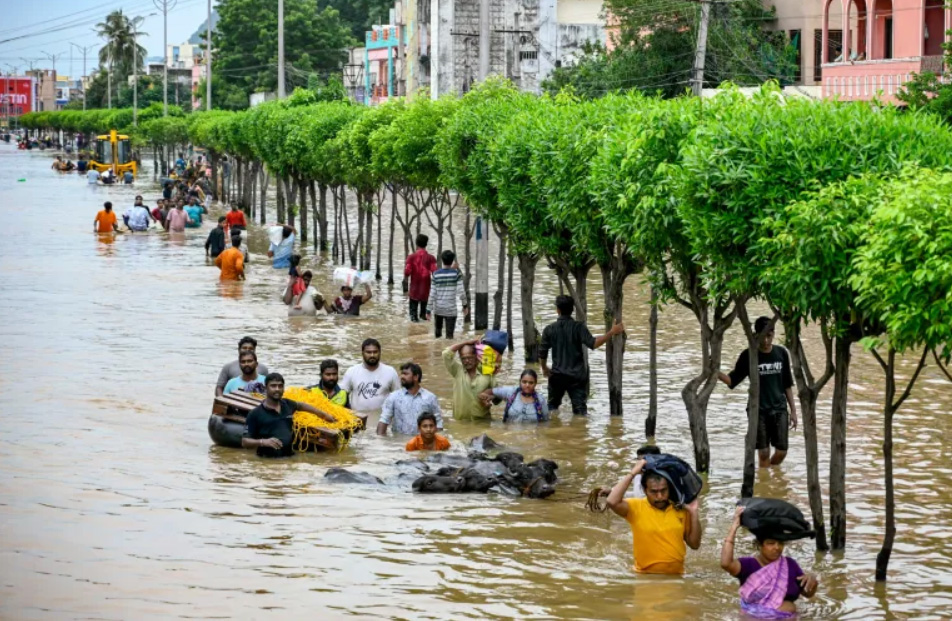
In North India, particularly in regions like Jammu & Kashmir, Himachal Pradesh, Uttarakhand, and Punjab, recurrent flood disasters have been largely attributed to intense monsoon rainfall driven by climate variability. However, the deeper causes stem from unsustainable human interventions such as deforestation, illegal sand mining, degradation of grasslands, and encroachment on floodplains. These actions have destabilized the fragile Himalayan ecosystem, transforming natural hydrological processes into man-made ecological crises.
Key Causes of Flood Vulnerability:
-
Deforestation and Road Expansion: Large-scale road projects have led to significant tree loss, replacing strong-rooted trees with saplings that fail to stabilize soil, thereby increasing landslides and debris in rivers. Himachal Pradesh lost over 1,000 hectares of forest cover in a decade due to such developments.
-
Loss of Meadows and Grasslands: Urbanization and overgrazing have degraded meadows, important for absorbing rainfall and regulating water flow, leading to unchecked runoff and flash floods.
-
Illegal Sand Mining: Unregulated mining has altered riverbeds, increasing bank erosion and destabilizing channels, heightening flood risks especially during heavy rains.
-
Encroachment on Floodplains: Rapid urbanization has resulted in illegal constructions on riverbanks, diminishing their natural flood-carrying capacity. The 2014 Kashmir floods were exacerbated by such encroachment.
Impacts of Floods:
- Humanitarian crises with thousands displaced and lives lost.
- Significant economic losses from infrastructure damage.
- Destruction of agricultural land and crops.
- Long-term ecological consequences like habitat loss and reduced groundwater recharge.
Solutions and Way Forward:
-
Sustainable Infrastructure Development: Implement eco-engineering methods and conduct Strategic Environmental Assessments for large projects.
-
Protecting Meadows and Grasslands: Regulate grazing, restore degraded lands, and enhance urban green spaces.
-
Regulating Sand Mining: Use technology to monitor mining activities and establish quick response teams against illegal operations.
-
Preventing Encroachment and Planning Land Use: Enforce no-construction zones in flood-prone areas and utilize GIS for flood-risk mapping.
Conclusion:
The flooding crisis is primarily a human-made ecological disaster exacerbated by activities such as deforestation, sand mining, and urban encroachment. For long-term resilience, North India must shift focus from reactive disaster relief to proactive ecological conservation, restoring forests and implementing sustainable land-use practices.
