



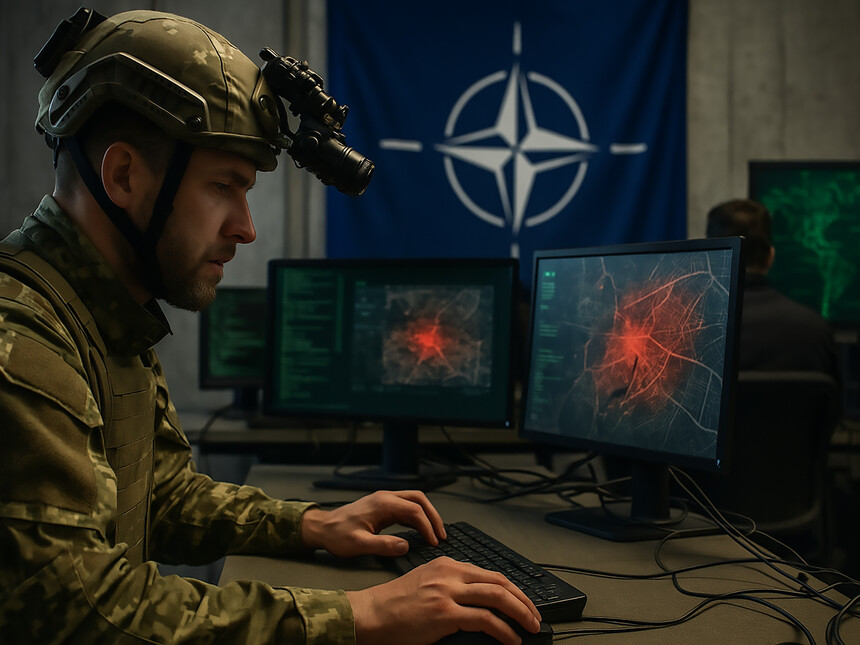
NATO is grappling with unprecedented threats, particularly from Russia, which has intensified its hybrid warfare tactics against eastern members like the Baltic states and Poland. These strategies include cyberattacks, disinformation, and sabotage, which exploit legal loopholes to create unrest without provoking a direct NATO response. The recent arson in Warsaw, linked to Russian intelligence, exemplifies the boldness of these tactics.
The 2022 NATO Strategic Concept highlights Russia as the “most significant and direct threat,” emphasizing that hybrid and cyber operations are used to undermine NATO’s security. This marks a shift in NATO’s focus, placing cyber and information warfare at the forefront of collective security. NATO’s earlier frameworks have adapted, acknowledging cyberspace as a critical operational domain, yet practical implementation remains uneven and heavily reliant on member states’ political will.
Two key institutions—the Strategic Communications Centre of Excellence (StratCom COE) and the Cooperative Cyber Defence Centre of Excellence (CCDCOE)—are pivotal in addressing these hybrid threats. StratCom COE tackles disinformation, conducting research and training, while CCDCOE develops legal and operational frameworks to manage cyber threats. However, both operate outside NATO’s formal command structure, limiting their direct influence.
Despite advancements, NATO struggles with fragmented authority in addressing hybrid threats, with responses primarily left to individual nations. The Alliance has condemned Russia’s tactics but often lacks a proactive unified stance. The rise of AI-driven disinformation amplifies these challenges, creating increasingly sophisticated fake news that undermines public trust.
The ongoing war in Ukraine serves as a testing ground for these hybrid strategies, with Russia leveraging disinformation alongside military aggression. NATO’s response has included public intelligence disclosures to preempt Russian narratives and support for Ukraine’s cyber defenses.
NATO’s progress includes recognizing collective cyber defense as integral to its security, yet decision-making complexity hinders timely responses. Critiques highlight the slow response to disinformation and the need for better coordination with the EU and stronger support for media literacy and civic resilience against propaganda.
To strengthen its position, NATO must establish clear deterrent policies against hybrid threats, promote coordinated responses, and foster societal resilience against misinformation. By addressing these gaps, NATO can better defend both geopolitical borders and the integrity of democratic institutions in the digital age. The ultimate goal is to create a unified, proactive strategy to counter hybrid warfare effectively, ensuring the Alliance remains resilient and ready in the face of evolving challenges.
