



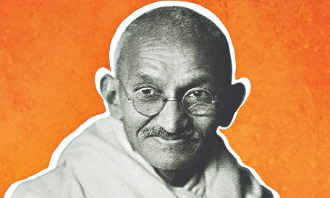
The article reflects on the enduring legacy of Mohandas Karamchand Gandhi on the anniversary of his assassination. It emphasizes that his martyrdom transformed his voice into a powerful moral force that transcends time, urging a deeper engagement with his principles, particularly the concepts of truth and love as political instruments. Gandhi’s idea of Satyagraha, or “soul-force,” sought to confront injustice without resorting to violence, and was grounded in ethical frameworks that addressed moral decay produced by empire.
During critical moments, including the Partition negotiations, Gandhi advocated for unity and challenged divisive nationalism, prioritizing moral imperatives over political gain, which ultimately cost him his life. His philosophy resonates today amidst global polarisation, offering a model of nonviolent resistance adaptable to various struggles, as seen in the American civil rights movement led by Martin Luther King Jr.
Gandhi’s moral vision redefined nationalism as inclusive and ethically driven, linking India’s independence to social justice and the upliftment of the marginalized. He critiqued Western civilization from its own dissident traditions, exposing imperial hypocrisy. The article argues that Gandhi’s legacy compels contemporary societies to reconsider power, ethics, and justice, particularly as we face crises marked by jingoism, dominionism, and other forms of extremism.
The text concludes by asserting that remembering Gandhi requires active engagement with his challenging ideas, emphasizing that his emphasis on truth and moral integrity remains crucial in a world increasingly devoid of ethical consideration.
