



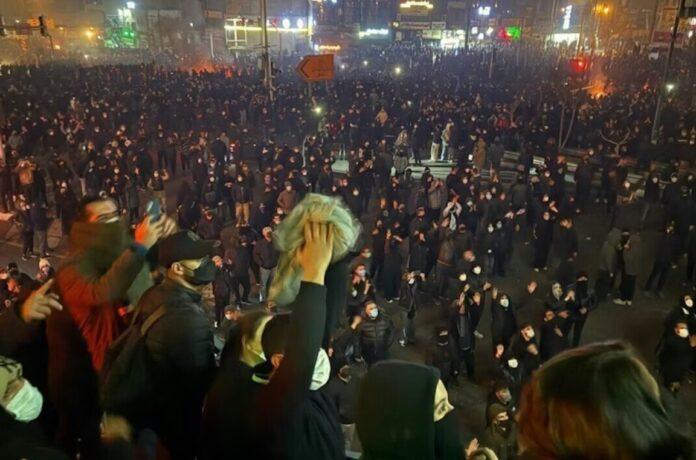
The uprising that began on December 28, 2025, originated as a protest by merchants in Tehran’s Grand Bazaar, rapidly escalating into the most severe rebellion against the Iranian regime due to deepening economic and social crises, exacerbated by sanctions and a brief war with the U.S. and Israel. Casualties range from 16,500 to 18,000 dead and 330,000 to 360,000 injured, with families often forced to pay for bullet costs or honor the regime’s narratives before receiving their loved ones’ bodies.
The Iranian regime, claiming to be open to reform for nearly three decades, reverted to brutal methods reminiscent of its rise to power. This violence has shattered any illusions about its reformist factions or the bourgeois opposition, leaving the underlying societal issues unresolved. Morad Shirin from the Iranian Revolutionary Marxists’ Tendency (IRMT) emphasized the challenges posed by a complete Internet blackout and the significant economic woes affecting all societal classes.
The regime’s repressive apparatus has evolved to quell dissent, increasingly relying on forces like the Pasdaran and Basiji. While some speculate about foreign intervention, Shirin argues that genuine popular support for regime change exists independent of outside actors. He asserts that military action from the U.S., if it occurs, will focus on negotiating concessions rather than regime change.
The son of the former Shah, Reza Pahlavi, remains a controversial figure perceived by some as a potential alternative to the current regime, despite being seen by others as a pawn of imperialist interests. Shirin notes that the regime manages to organize demonstrations showcasing its grip on power, even if its base has significantly weakened over time.
The working class’s response remains uncertain due to the limited information flow from within Iran. According to Shirin, true change hinges on a general strike led by the working class, particularly in key industries. The IRMT aims to build revolutionary consciousness among workers, preparing for a potential broader workers’ revolution that may foster solidarity against imperialism in the region.
