



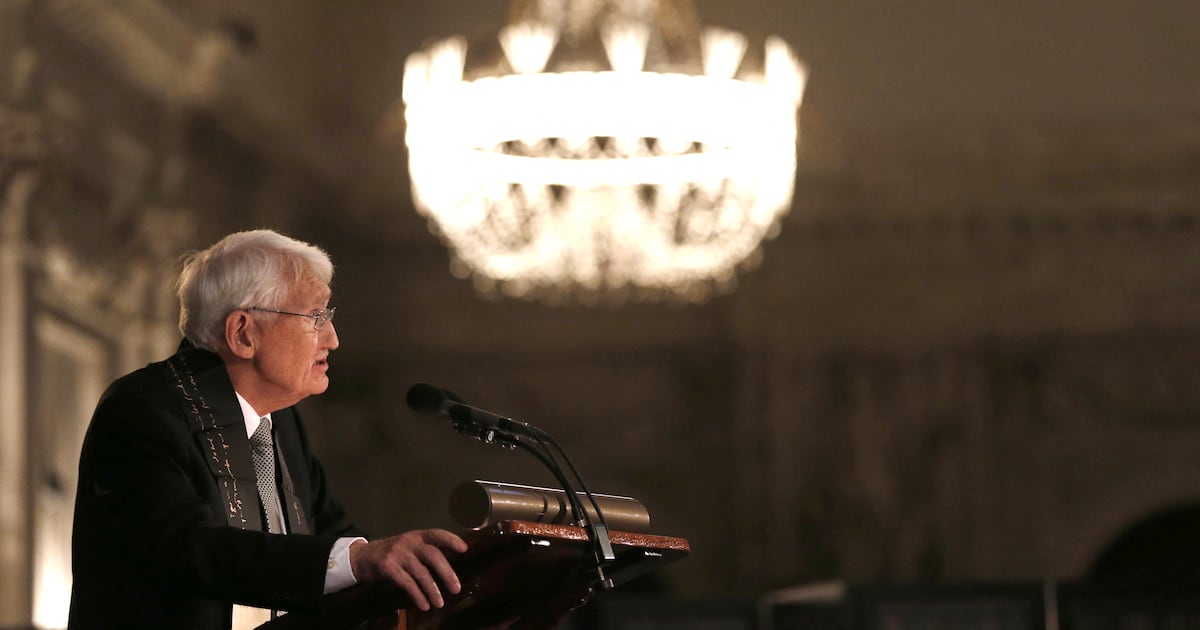
The death of German philosopher Jürgen Habermas has drawn significant attention, marking the end of a life deeply influential in modern Western thought. He emphasized the importance of public discourse in sustaining democracy and was known for his critiques of fascism and authoritarianism, drawing from his own experiences as a German who grew up post-World War II.
Habermas had a passion for the European integration project and spent his later years sounding alarms about the political climate, particularly the resurgence of fascist ideologies, including the concerning embrace of Carl Schmitt’s ideas among contemporary political figures. His early work critiqued prominent figures such as Martin Heidegger, revealing the moral failings of postwar German society in accommodating leading Nazis.
Throughout his career, which spanned over six decades, Habermas contributed concepts like “constitutional patriotism” and engaged in battles against nuclear rearmament and historical revisionism regarding the Nazi era. Later criticisms of his views on issues like Russia and Gaza reflected an evolution of his thought amid the rise of social media and chaotic discourse, leading some to question the viability of his ideals in modern contexts.
Despite witnessing the disintegration of many postwar norms and institutions, Habermas maintained a belief in the potential for democratic discourse to foster social progress. He remained an advocate for humanist ideals, intertwining elements of Enlightenment and Judeo-Christian heritage. In his final years, he was viewed by some as a disillusioned idealist, embodying resilience akin to Samuel Beckett’s characters, persistently engaging with the world despite the challenges it presented.
