


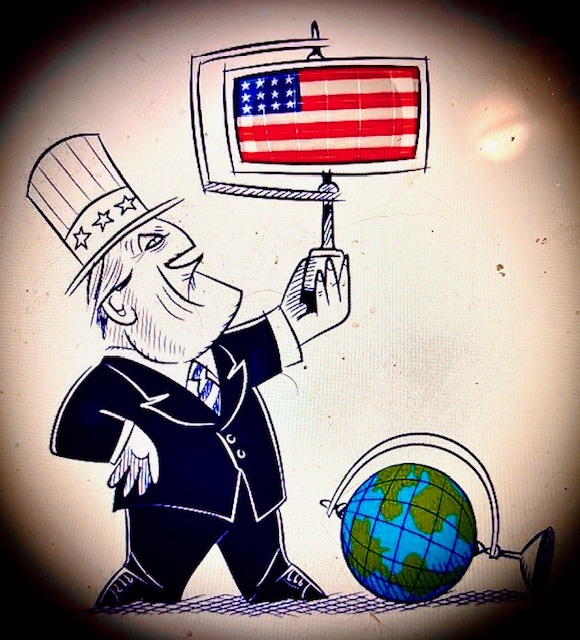
The article revisits an earlier examination of American federal deficits and debt, highlighting significant changes since the Trump administration. It argues that deficits, previously seen as fiscal burdens, have evolved into deliberate tools for political power, enabling the constraints of future governments and promoting oligarchic interests while undermining democratic capacity.
Key Points:
-
Historical Patterns:
- Republican administrations usually cut taxes and increase defense spending, leading to higher deficits, while Democratic administrations inherit these deficits, attempting to reduce them at a political cost.
- This pattern, consistent across multiple administrations, saw a shift during Trump’s tenure where the pretense of fiscal discipline was abandoned.
-
Normalization of Permanent Deficits:
- Under Trump, deficits became normalized, with the 2017 tax cuts disproportionately benefiting corporations and adding trillions to the deficit without serious offset measures. This marked a move from fiscal caution to an acceptance of continuous deficits.
-
Pandemic Spending:
- The COVID-19 crisis expanded deficit spending drastically but favored financial intermediaries and corporations rather than building robust public capacity. This led to an institutional vacuum in public health and support systems.
-
Shifting Nature of Transfer Payments:
- Transfer payments have become politicized, shifting from social insurance to forms of patronage, with federal resources conditioned on political loyalty. This shift reflects a broader change in how fiscal policies are perceived and implemented.
-
Health Care and Cost Control:
- The absence of effective cost controls during the Trump years aggravated rising health care costs and inequality, further weakening public expectations about access to care.
-
Financialization and Deficits:
- Current deficits serve more to stabilize financial markets than to address public needs, leading to a class-coded view of fiscal responsibility, where social program deficits are deemed irresponsible while those supporting asset prices are considered necessary.
-
Role of the Democratic Party:
- The Democratic Party faces significant constraints, leading to repeated failures in combating the expansion of deficits under Republican leadership. The party appears to manage decline rather than challenge the status quo.
-
Deficits as Tools for Authoritarianism:
- Permanent deficits can reinforce authoritarian regimes by legitimizing emergency powers, creating selective austerity measures, and enabling crisis governance. Effective governance threatens authoritarian systems far more than fiscal chaos.
Conclusion:
The article contends that today, deficits are not merely a byproduct of poor governance but have become instruments of undemocratic strategies, ultimately serving to hollow out democratic institutions and solidify authoritarian control. The emphasis on financialization shifts responsibility away from public accountability, presenting the deficit as a severe but manageable tool of modern fascism.
