



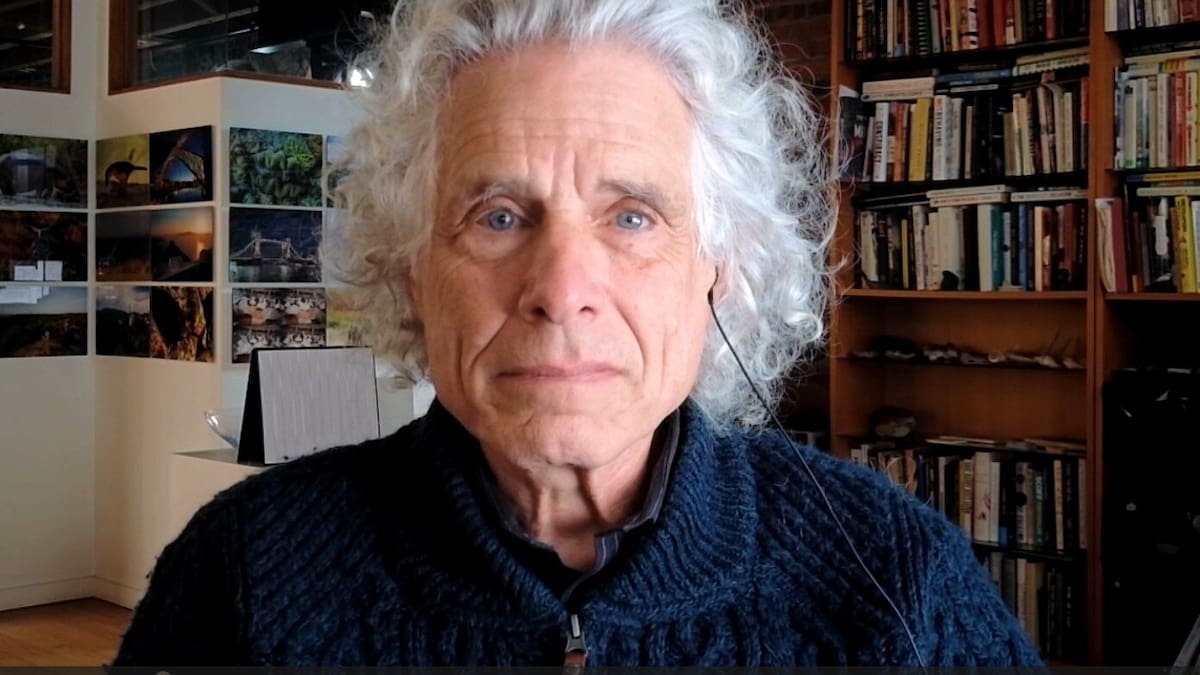
In a recent interview, Harvard psychologist Steven Pinker discussed the current political climate in America, particularly focusing on Stephen Miller’s inflammatory rhetoric and its implications for the rise of authoritarianism, which Pinker describes as akin to fascism. Miller’s speech emphasized group identity and outrage, reflecting a broader trend of “communal outrage,” where perceived attacks on a group’s member provoke a defensive, often aggressive response.
Pinker criticized Donald Trump as the antithesis of Enlightenment values, suggesting that Trump’s nationalism and disregard for the rule of law threaten democratic principles. He defined free speech as critical for open discourse and noted that academic freedom must be distinguished from general free speech, emphasizing the need for quality standards in academic work.
Pinker, known for his optimistic views about human progress, expressed concerns about climate action, attributing challenges to cognitive biases, particularly my-side bias, which leads to polarized views on environmental issues. He highlighted the importance of developing technological solutions for climate change, arguing against the notion that addressing it requires significant sacrifices in energy consumption.
Despite acknowledging the decline of liberal democracy, Pinker maintains that many indicators of human progress continue to improve, urging that solutions to contemporary problems are achievable if recognized and addressed head-on. He defended the Enlightenment ideals of reason and human rights, even when noting their historical contradictions.
The conversation concludes with Pinker’s belief that while challenges exist, optimistic perspectives grounded in data reveal a trajectory of improvement, advocating for proactive engagement rather than despair.
