



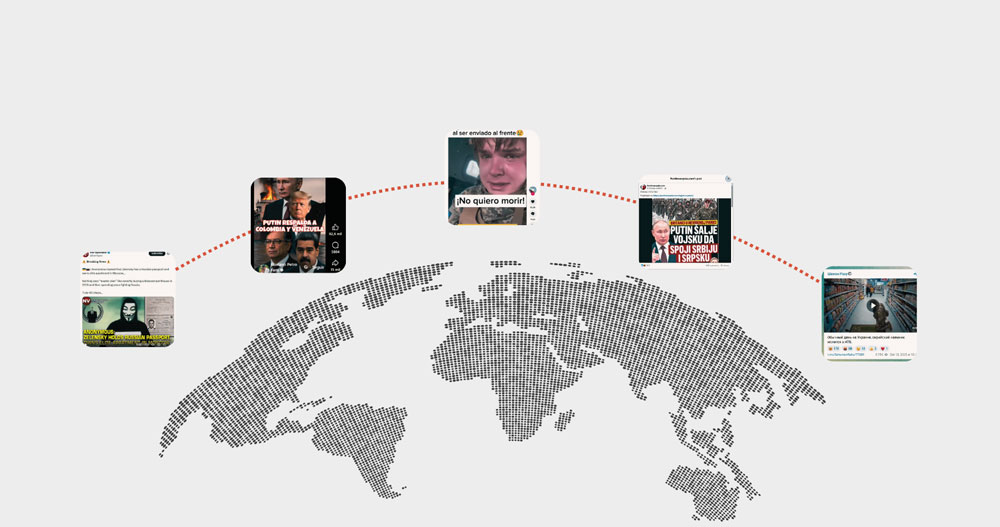
Summary of the ATAFIMI Project Report (Q4 2025)
1. Introduction and Key Findings
The report analyzes incidents of Foreign Information Manipulation and Interference (FIMI) from Russia, covering monitoring from October 1 to December 31, 2025, across countries including Spain, Ukraine, Lithuania, and several Latin American nations. Key findings include:
- Disinformation narratives largely focused on the Ukrainian Army, garnering over 2 million views on false claims about its foreign soldiers.
- Claims against Ukrainian President Volodymyr Zelensky, particularly regarding corruption, appeared in most participating countries, with notable viral posts accusing him of various baseless actions.
- AI-generated content supporting disinformation was prevalent, with many viral posts receiving fact-checking labels on platforms like Facebook, though inconsistently across other platforms.
2. Cross-border Narratives
During the last quarter of 2025, disinformation narratives intensified against Ukrainian authorities and evolved in Latin America, focusing on themes like recruitment and military losses. Key points include:
- New narratives exaggerated the Ukrainian Army’s recruitment efforts, framing them as coercive, which resonated in both Europe and Latin America.
- There was significant disinformation aimed at discouraging enlistment among foreign volunteers, especially from Latin America.
- AI-generated media played a crucial role in these narratives, depicting emotional soldier experiences and alleged mistreatment.
3. Country-by-Country Trends
Europe:
- Bosnia and Herzegovina: Localized disinformation exploited ethnic sensitivities and history, particularly in light of the Dayton Agreement.
- Serbia: Spreading false claims about Zelensky and alarming posts regarding NATO and Russian interactions dominated social media engagement.
- Georgia: Posts featuring AI content plied identity-based disinformation, contributing to negative portrayals of Ukrainian soldiers.
- Lithuania: Conspiracy theories suggested a Jewish takeover of Zelensky’s cabinet, while other posts claimed Ukrainian soldiers donned Nazi symbols.
- Ukraine: Telegram was a hotbed for disinformation, including that on Zelensky’s credibility and the status of media coverage.
- Spain: Most viral posts centered around Zelensky, with little moderation despite widespread views.
Latin America:
- Argentina: An AI-generated video falsely claimed the war was over, receiving significant views.
- Colombia: Viral narratives centered on Colombian volunteers in Ukraine, aligning with messages from both government and Russian sources.
- Mexico: AI-generated videos of soldiers expressing regret reached millions without moderation.
- Venezuela: A Telegram channel shared fake claims about forcibly recruited Ukrainian soldiers, amplifying disinformation across nations.
Information about the Project
The ATAFIMI project employs technological tools to study FIMI and disinformation across participating countries, creating a centralized repository for monitored content. Partner organizations include prominent fact-checking and media groups from each country involved.
