



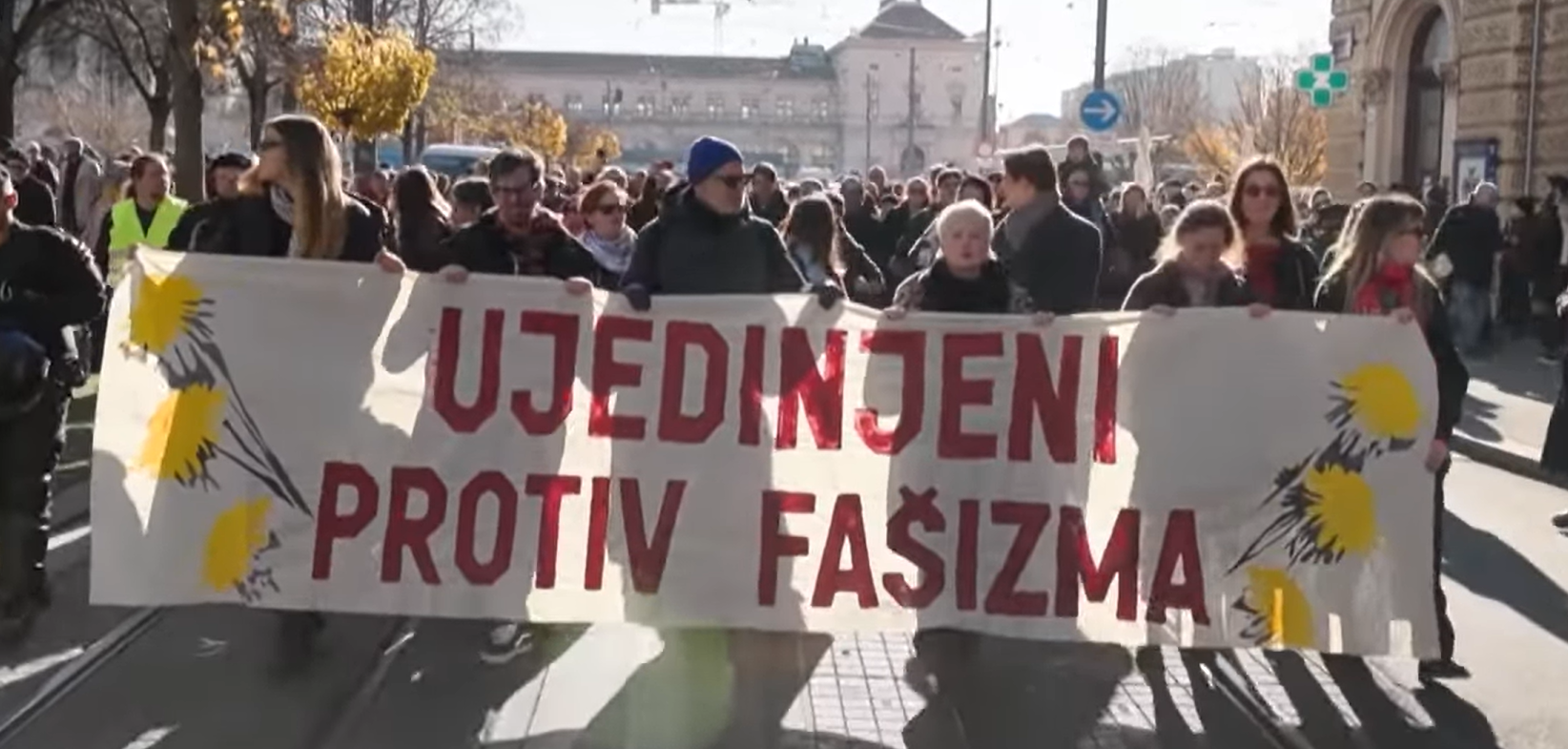
On Sunday, tens of thousands of Croatians participated in anti-fascist demonstrations across several cities, including Zagreb, under the slogan “United Against Fascism.” The rallies were a response to recent extremist incidents targeting Croatia’s ethnic Serb community, including assaults at cultural events involving Ustasha-era salutes that hark back to the pro-Nazi regime during World War II.
In November, masked individuals disrupted events meant to celebrate Serbian culture, resulting in confrontations that required police intervention. Additionally, acts of vandalism against Serbian minority buildings have been reported.
The protests called for government action against far-right groups and demanded investigations into intimidation practices against minorities. Although largely peaceful, some clashes with police occurred.
Critics point to a political climate that seems to embolden the far right, citing a large concert by nationalist singer Marko Perković as a turning point for nationalist mobilization. Prime Minister Andrej Plenković dismissed claims that his government fosters extremism as exaggerated.
Overall, the demonstrations reflected deep social divisions in Croatia regarding national identity and the legacies of the 1990s war, highlighting a need for a vigilant defense of democratic norms against the resurgence of fascism.
