


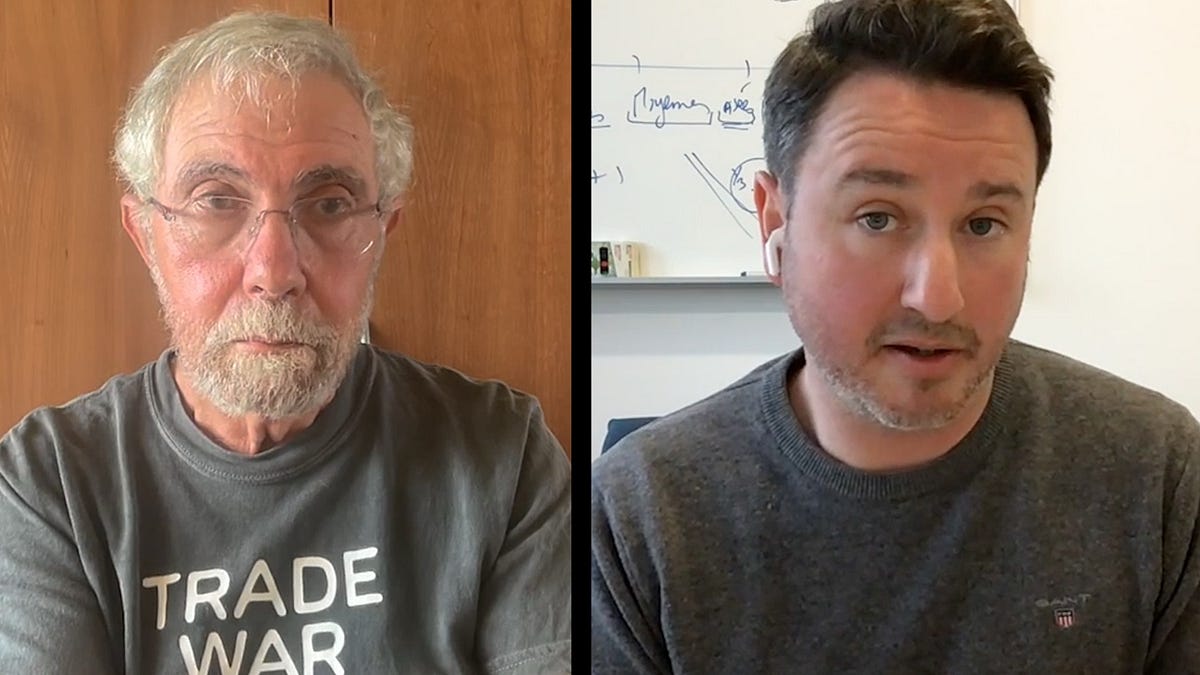
In a conversation between Paul Krugman and Gabriel Zucman, a renowned expert on inequality and tax evasion, they discuss recent tensions between the U.S. and Europe, particularly regarding trade relations and taxes. Zucman emphasizes the EU’s new “anti-coercion” tool, which presents a potential response to U.S. tariffs, although its effectiveness depends on member state consensus.
They also delve into economic growth comparisons between the U.S. and Europe. Zucman challenges the narrative that the U.S. economy is outpacing Europe, citing that national income growth per adult is similar in both regions since 2010. They examine productivity figures, suggesting that technological advancements have not significantly contributed to overall economic growth.
Zucman highlights the alarming concentration of wealth, particularly among the ultra-rich in the U.S., which he connects to the broader issue of political power and its implications for democracy. He proposes a minimum wealth tax for billionaires, aiming to ensure that extreme wealth comes with responsibilities to society. Despite challenges, Zucman maintains optimism for democratic forces to address inequality, noting public support for wealth taxation.
Their discussion touches on the importance of investing in education and infrastructure to counteract the structural issues present in both economies. Zucman believes that the wealth concentration problem is severe but emphasizes that initial steps, even minor reforms, could lead to more substantial changes in the future.
