



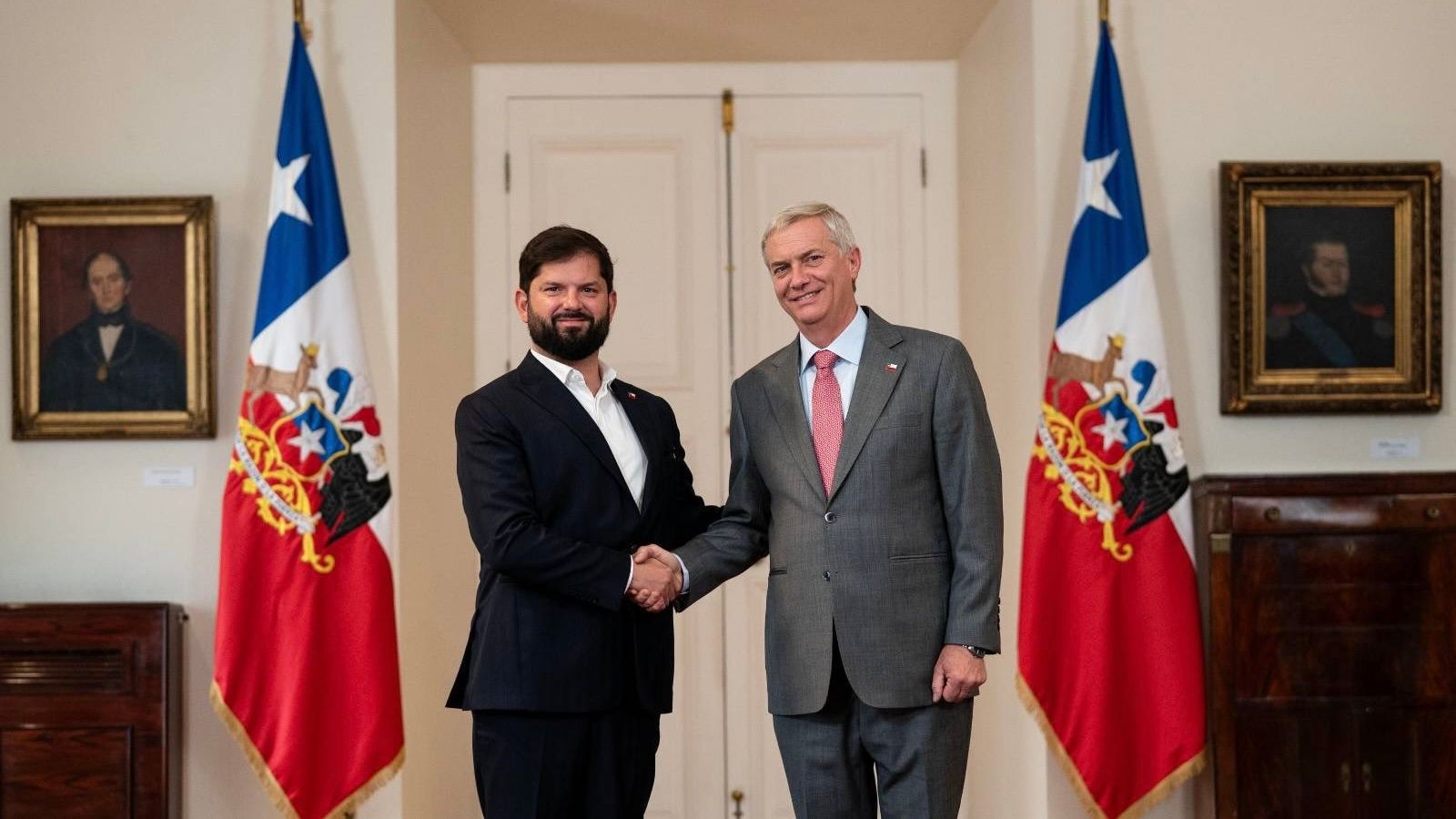
Chilean President Gabriel Boric welcomed President-elect José Antonio Kast, a candidate from the right-wing Republican Party known for his admiration of Chile’s past dictatorship, to La Moneda Palace for a transfer of power. Kast won a decisive victory in the recent presidential runoff, defeating leftist Jeannette Jara with a 58.2% majority. His campaign focused on xenophobic and law-and-order rhetoric and promises of significant cuts to public spending, aimed primarily at vulnerable populations, such as immigrants.
Kast plans to implement strict immigration controls, build border barriers, and lower corporate taxes to attract investment, which has pleased markets and corporate media. However, his proposals risk social unrest, with one spokesperson admitting potential backlash against austerity measures.
The political landscape reflects a historical shift, as Kast’s administration may resonate with past military rule. There are concerns about increased repression, similar to responses seen during previous protests. Both the outgoing and incoming leaders have maintained a commitment to institutional processes despite the potential for civil discord.
As the right-wing policies emerge, lessons are drawn from the failures of previous leftist leaders, suggesting a need for a revolutionary leadership to effectively combat rising fascism in Chile and throughout Latin America.
