



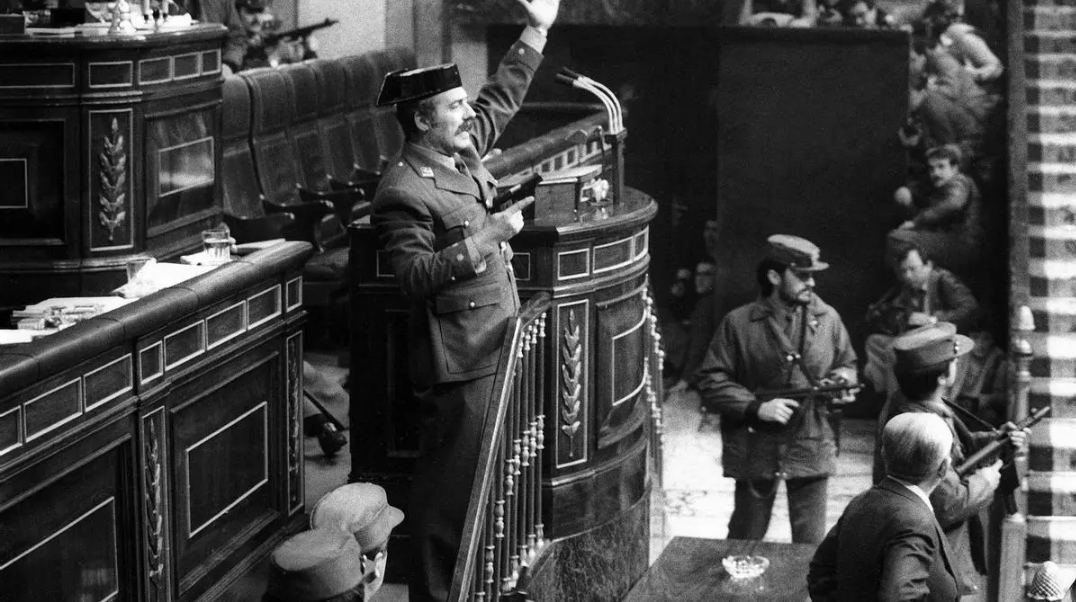
The recent death of Antonio Tejero, the figure behind the failed 1981 coup attempt in Spain, has sparked renewed discussions about the fragility of democracy in Europe. Tejero, who led an armed invasion of the Spanish Parliament with Civil Guard troops, did so under the support of senior military and intelligence officers, as revealed by newly released documents. This attempt to revert Spain’s transition to democracy came just five years after the death of dictator Francisco Franco.
Despite the coup’s failure, the involvement of pro-fascist elements within the Spanish intelligence service revealed deep-seated ties to historical fascism, including connections to WWII’s Nazi regime. Figures like Major General Alfonso Armada and Lieutenant General Jaime Milans del Bosch were among those backing Tejero, who faced minimal consequences for their actions, highlighting systemic issues within the military and intelligence apparatus.
The article draws parallels between past and present, indicating that current far-right groups in Spain are inspired by Tejero’s legacy, potentially posing a renewed threat to democracy. It warns against complacency as political climates across Europe, including in Britain, become increasingly influenced by far-right ideologies. Ultimately, the message emphasizes that both political leaders and citizens must actively defend democracy to prevent the resurgence of fascism and undemocratic practices.
