



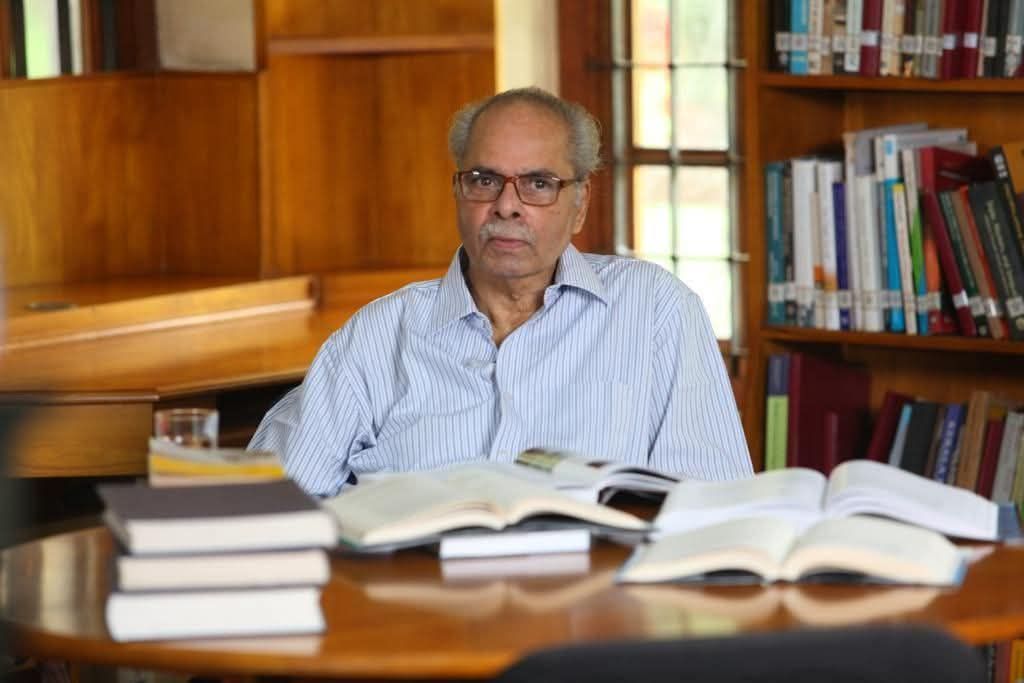
Prof. K.N. Panikkar (1936-2026) was a prominent historian who concentrated on the cultural and intellectual movements in colonial India, utilizing Marxian analysis, particularly the Gramscian method. He passed away at the age of 90 in Thiruvananthapuram, shortly after his birthday celebration.
Panikkar’s academic journey began in the early 1950s in Kerala, where he initially studied science but eventually shifted his focus to history, influenced by his involvement in student activism. He held prestigious roles, including head of the history department at Jawaharlal Nehru University (JNU) and Vice Chancellor of the Sree Sankaracharya University of Sanskrit.
His work emphasized the struggles between social ideologies and historical processes, exploring themes like the conflict between traditional and colonial values. Notably, he analyzed the Malabar Rebellion and the role of caste and religion in social movements.
Panikkar foresaw the rise of fascism in India decades ago, warning against the influence of saffronization in educational materials. His extensive writings, including “Culture, Ideology, and Hegemony,” reflect his commitment to historical analysis as a site of struggle against oppressive ideologies. His legacy continues to provoke reflection on the relationship between education and power in contemporary society.
