


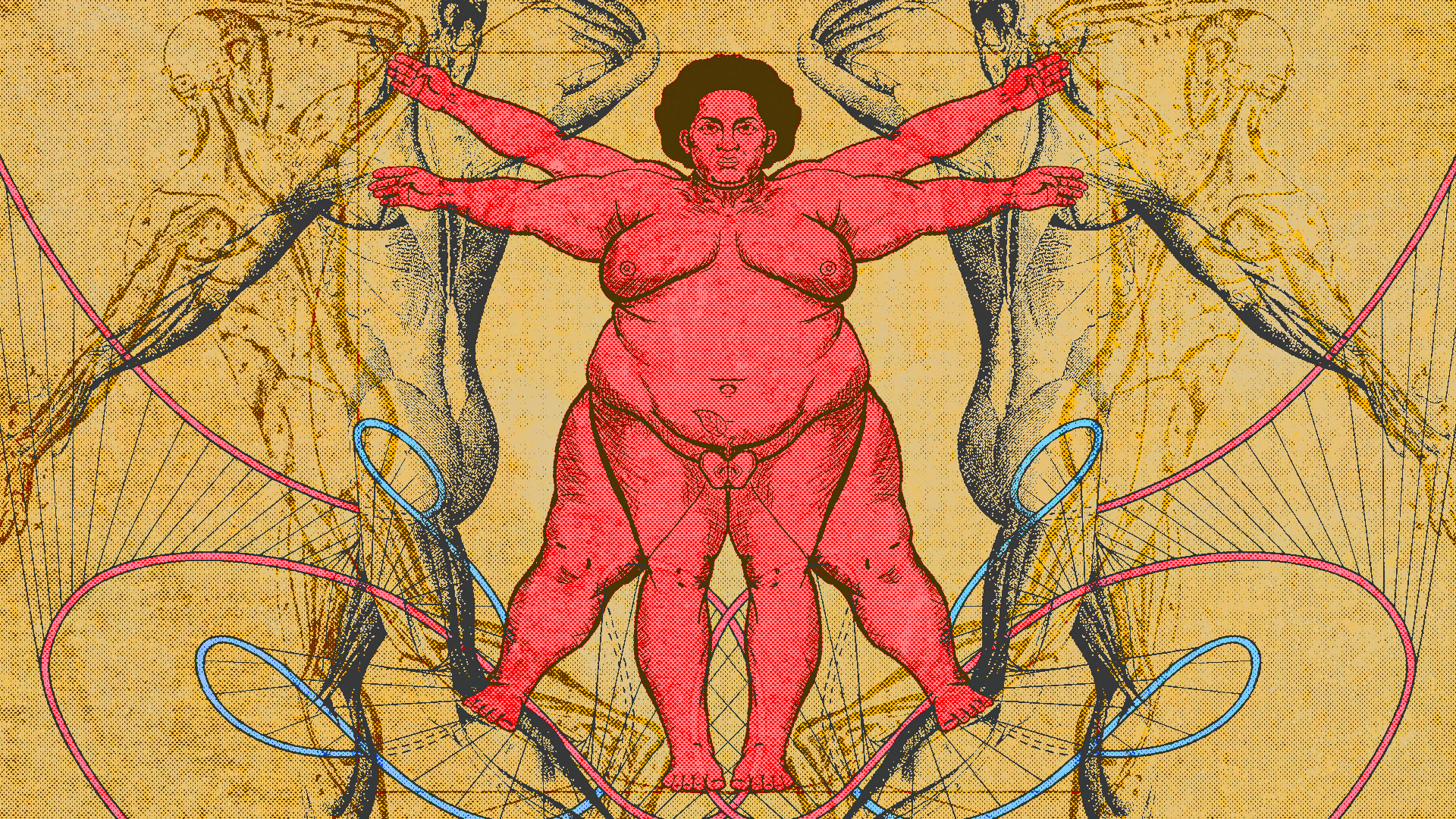
This essay explores the concept of body fascism, which promotes an “ideal” body type as a symbol of patriotism linked to health, discipline, and worth, while marginalizing “non-ideal” bodies that face increased violence and erasure. Following the COVID-19 pandemic, societal pressure on bodily appearance has intensified, emphasizing thin, muscular, and mostly white bodies as the standard. These ideals, promoted by institutions like media and government, give authority to certain bodies while excluding and diminishing others.
Historically, the body mass index (BMI), created by mathematician Adolphe Quetelet, defined an ideal male body based on cisgender, white European characteristics. Quetelet’s work was co-opted to justify eugenics and further marginalized non-ideal bodies.
The essay argues that proximity to this “ideal” body determines societal value, where desire shapes who is recognized and cared for. After events like pandemics or wars, body fascism often resurfaces, seen in responses to crises such as HIV/AIDS and the so-called “obesity epidemic.” The current fixation on bodily optimization represents a continuation of historical trends linking fatness to moral failure, particularly concerning Black individuals.
Body fascism operates subtly in neoliberal democracies, masking authoritarian control as care. Mechanisms like BMI replace overt classifications, emphasizing health and productivity while neglecting marginalized bodies. The policing of Black bodies underscores institutional governance, making fatness a target of control.
The essay concludes that body fascism is a contemporary issue, illustrated by ongoing government actions determining whose bodies are valued or erased. Recognizing these dynamics sharpens our understanding of how fascism operates through physical ideals and repression, particularly against Black fat bodies.
