



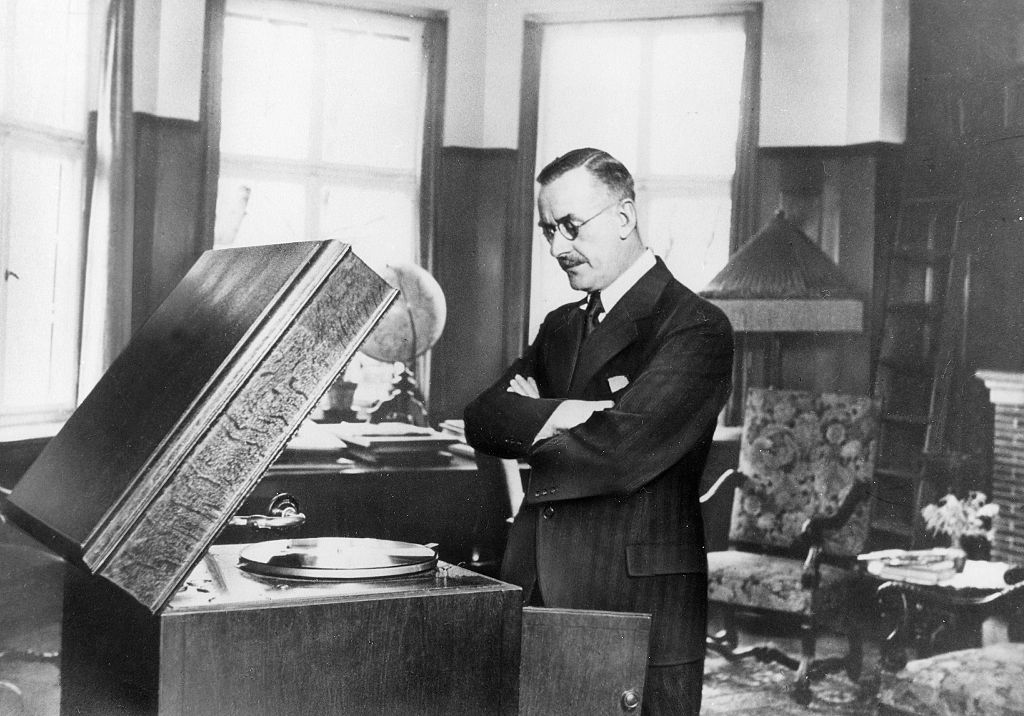
The article examines a dangerous misconception that the far right appeals only to unintelligent individuals, revealing a more complex truth. Historian Robert Paxton’s The Anatomy of Fascism describes fascism as relying on “mobilizing passions” rather than intellectual rigor, asserting that many thoughtful people have historically supported such movements. Thomas Mann’s Doctor Faustus serves as a nuanced allegorical exploration of this phenomenon, chronicling how Germany’s cultural elite, including thinkers like Nietzsche, contributed to the rise of fascism by prioritizing intellectualism over human connection and moral responsibility.
Mann’s characters, Dr. Serenus Zeitblom and Adrian Leverkühn, illustrate this tension. Zeitblom embodies humanism and empathy, while Leverkühn, in his quest for artistic greatness, forsakes human love and ultimately suffers for his isolation and misguided ambitions, paralleling Germany’s descent into fascism. Mann critiques how the elite’s disdain for democracy and the masses fostered a toxic sense of superiority, particularly after World War I.
The article emphasizes that the far right continues to draw on similar ideological currents today, championing abstract ideals while often disregarding factual accuracy and ethical considerations. This modern resurgence features figures who, like their predecessors, employ grand narratives and myths to rally support.
Furthermore, the far right’s philosophical orientation reflects a deep skepticism towards rational discourse, viewing it as a threat to hierarchical structures and order. It seeks to replace reason with myth, aesthetic appeals, and authoritarian power, reminding us that history, as Mann illustrates, may repeat itself, especially in the face of rising autocracy and undemocratic ideologies. In many ways, this tension highlights a continual struggle between humanist values and the temptations of totalitarianism.
