



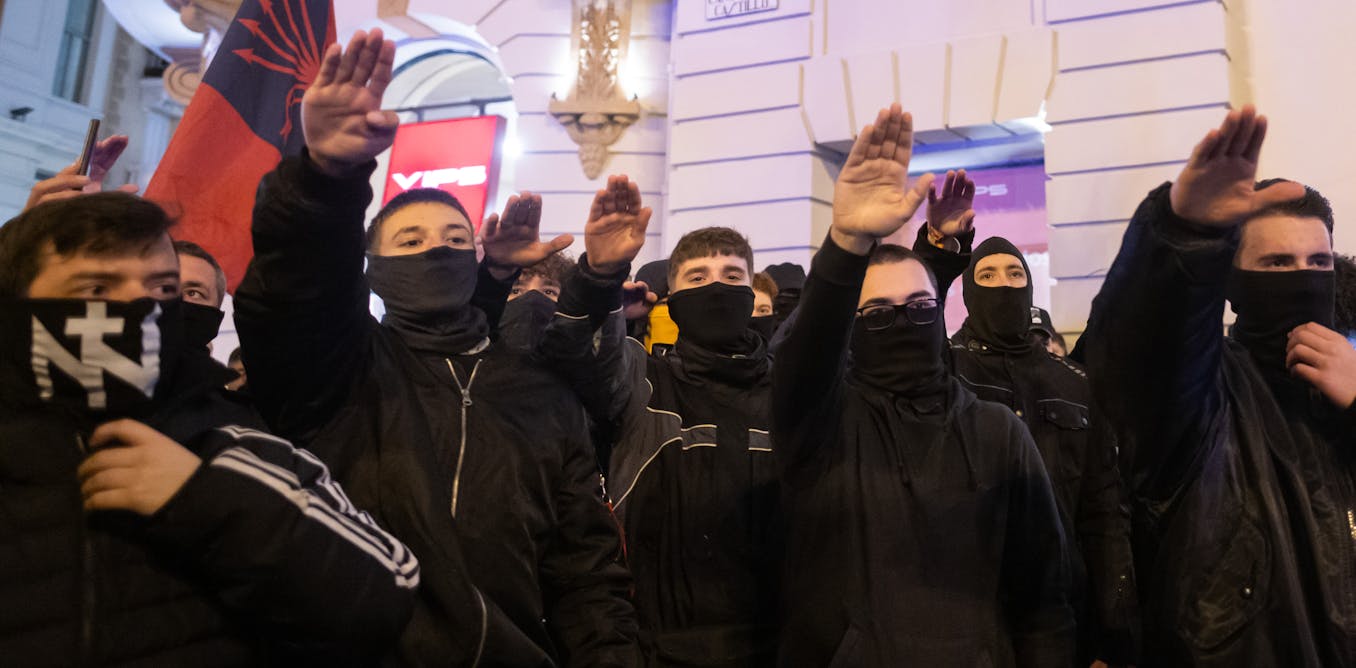
Residents of Minneapolis feel besieged, describing their city as under a “fascist occupation” due to the surge of Immigration and Customs Enforcement (ICE) agents after two local residents were killed by federal forces. Comparisons to Hitler’s Gestapo have emerged, prompting a reevaluation of the U.S. political landscape in light of historical fascism, particularly that of Francisco Franco’s dictatorship in Spain (1936-1975).
The article outlines how the Falange party, akin to Trump’s MAGA movement, rose to power by capitalizing on societal anxieties through radical nationalism and exclusivity. Once in control, Franco established oppressive measures against dissent through the secret police, paralleling contemporary methods used by Trump’s administration.
Franco’s regime relied on the Catholic Church to promote traditional roles and suppress women’s rights, seen as a precursor to authoritarianism. Similarly, recent U.S. trends reflect attempts to curtail women’s reproductive rights and promote far-right ideals. Economically, Franco’s autarkic policies impoverished Spain, echoing Trump’s “America First” tariffs that threaten domestic well-being.
Intellectual suppression in Franco’s Spain resonates with current U.S. educational restrictions and a growing embrace of white Christian nationalism. Despite Trump’s admiration for autocrats, the article argues that these systems may not replicate history perfectly but evolve in subtle yet impactful ways.
Recent incidents in Minneapolis, including unmarked agents forcibly entering homes and using violence against protesters, highlight alarming tactics reminiscent of past authoritarian regimes. The article concludes that recognizing these connections between Francoism and Trumpism is essential for understanding the risks to democracy today.
