



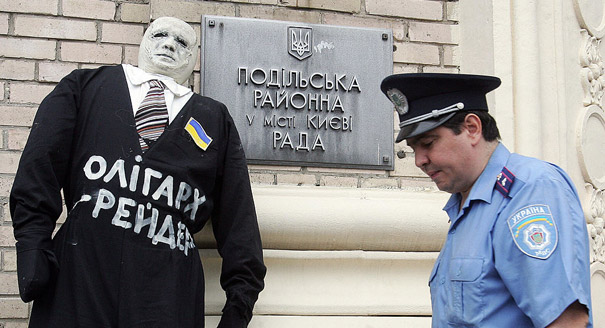
After Petro Poroshenko became president of Ukraine in June 2014, he promised to initiate the deoligarchization of the economy, viewing oligarchs as a source of chaos. However, this promise was not substantiated by real actions. The oligarchic system in Ukraine, established in the late 1990s from a close relationship between power and big business, has shown resilience and adaptability. Following the 2013–2014 Euromaidan protests, oligarchs did not vanish; instead, they formed new alliances with the subsequent government.
Oligarchs maintain their significant influence due to several key factors: their control over critical economic sectors, substantial financial resources, the fragmented and weak central government, and the lack of cohesive political opposition. Additionally, oligarchs own major media outlets, consolidating their political power.
Moreover, the ongoing war with Russia complicates deoligarchization efforts, as targeting oligarchs could provoke political instability. The political elite post-Euromaidan has also formed tactical alliances with oligarchs, further entrenching their status.
Despite some initial reforms, such as attempts to modernize the gas sector, the oligarchic system remains intact, with old and new oligarchic groups emerging. The current political and business environment heavily relies on connections and wealth, hindering substantial progress.
The challenges faced by Ukraine—corruption, weak institutions, and ineffective administration—bestow further power on oligarchs. Long-term reforms, including anti-corruption measures and establishment of independent institutions, are vital for reducing oligarchs’ influence and facilitating modernization. However, the lack of political will among the ruling elite raises doubts about the speed and effectiveness of these reforms. Understanding Ukraine’s political dynamics necessitates a deeper exploration of its oligarchy, which remains a critical barrier to genuine reform.
Overall, the presence of oligarchs complicates Ukraine’s transition from its post-Communist past, necessitating radical reforms to break the existing, non-developmental model.
