



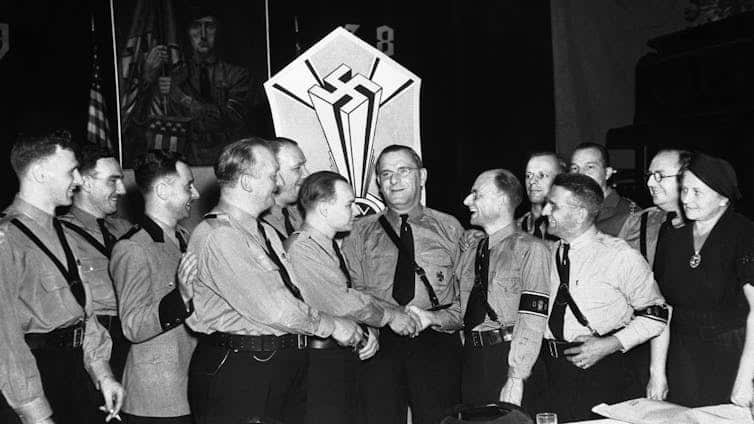
Arlene Stein’s article explores the current discourse around the potential for fascism in the United States, highlighting the presence of extremist groups and the influence of historical movements like the German American Bund. While some historians argue that conditions for fascism cannot exist in America, Stein recounts how fascist ideas had significant traction in the early 20th century, with groups promoting a vision of a white Christian nation.
Through a sociological analysis of oral histories from New Jersey in the 1930s and 40s, she reveals that many witnesses minimized the Bund’s threat decades later, framing it as deviant and forgettable despite its rootedness in ordinary American life. This selective memory is influenced by social affiliations and a desire to distance from uncomfortable truths.
Stein argues that collective memory often overlooks local histories of homegrown fascism, contributing to a narrative that falsely reassures Americans of their immunity to such ideologies. She encourages communities to acknowledge and commemorate their past actions against such movements, as exemplified by a recent plaque in Connecticut honoring citizens who resisted the Bund.
The purpose of remembering this history is not to instill shame, but to recognize America’s democratic vulnerabilities and the ways extremism can manifest, urging vigilance against the insidious nature of fascism within societal norms.
