


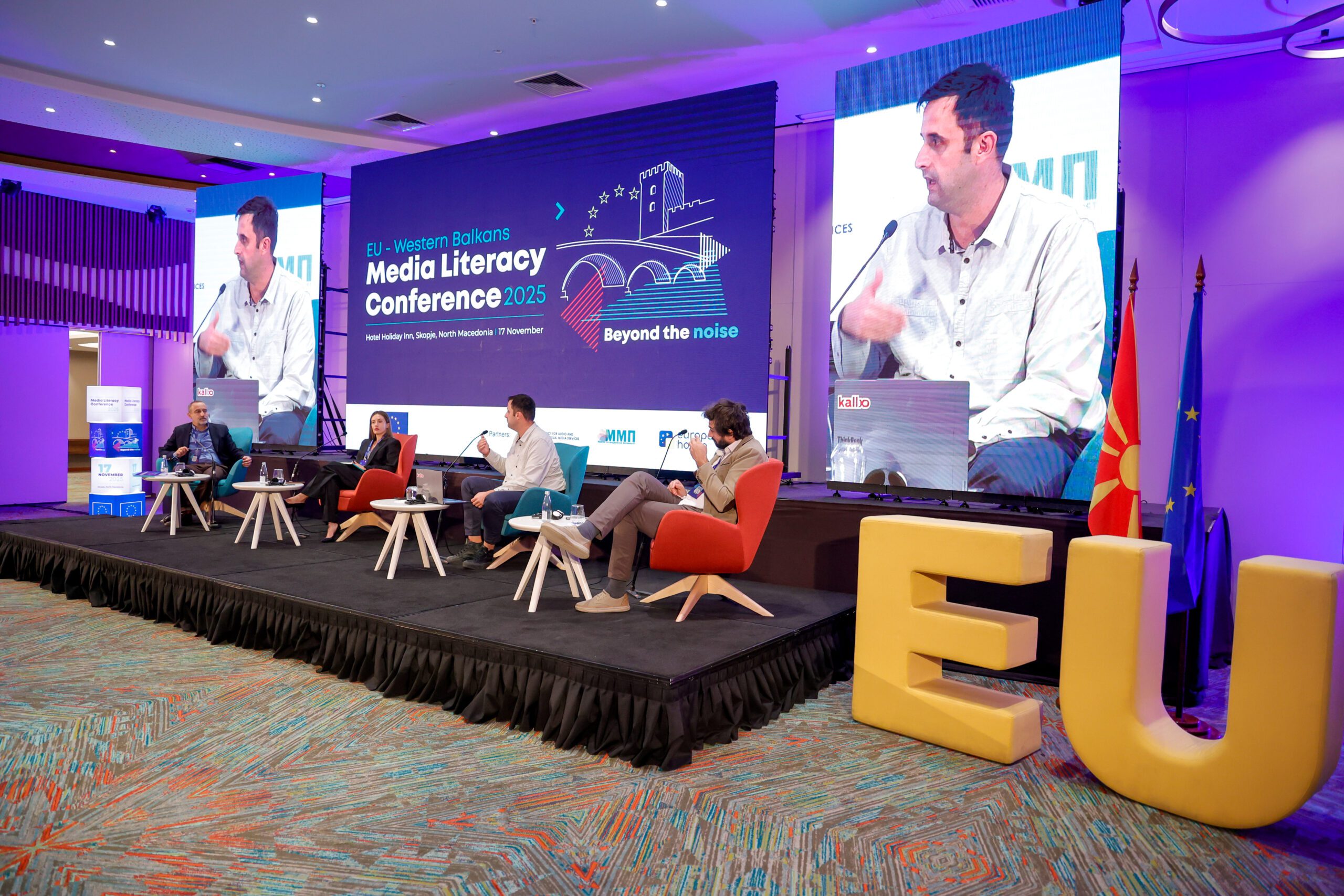
The EU–Western Balkans Media Literacy Conference 2025, held on November 17 in Skopje, gathered over 150 participants from the Western Balkans, EU, and Eastern Partnership to tackle challenges like disinformation, foreign information manipulation and interference (FIMI), and the influence of emerging technologies on democracy.
Attendees included representatives from North Macedonia, Albania, Serbia, and other countries, alongside media regulators, journalists, civil society groups, and digital policy experts. EU Ambassador to North Macedonia, Michalis Rokas, emphasized the critical role of media literacy as a foundation for informed citizenship, underscoring the necessity of equipping individuals to navigate the digital landscape amidst rapid technological advancements and coordinated disinformation efforts.
The conference featured high-level panels discussing the impact of social media on information manipulation, the rise of gendered disinformation, and the implications of digital platforms on youth. It also focused on translating the EU’s Digital Services Act into regional contexts through human rights-focused approaches.
Practical learning was a key aspect, with breakout sessions addressing FIMI responses, science-related misinformation, and AI’s role in information integrity. Workshops explored ethical AI use, encouraging knowledge exchange among participants.
Professor Roman Jurowetzki from Aalborg University closed the event with a keynote on the importance of building AI-enabled defense systems based on institutional cooperation and verification, rather than relying solely on technology. The conference continues to be a vital platform for cooperation and dialogue aimed at enhancing information integrity and resilience against disinformation in the region.
