



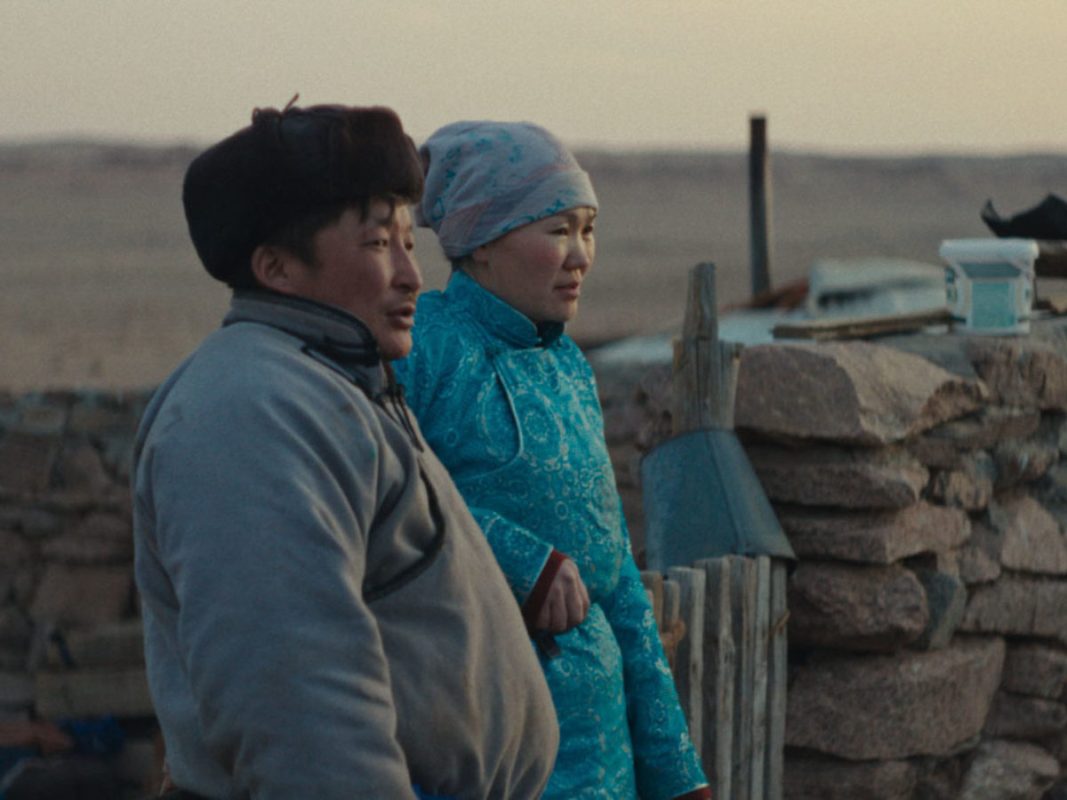
Gabrielle Brady’s film, “The Wolves Always Come at Night” (2024), tells the poignant story of a Mongolian couple affected by the climate crisis. Presented in a docudrama format, the film offers a more intimate perspective on ecological issues, contrasting with earlier films that often depicted such crises as distant concerns, potentially fostering false hope.
The couple leads a self-sufficient lifestyle, relying on goats and horses for their livelihood, away from industrial society. However, worsening environmental conditions, like unpredictable storms, increasingly threaten their way of life. Brady beautifully captures the rhythm of their daily routines, using a dreamlike aesthetic that highlights the serene monotony of their existence.
The film poignantly depicts their transition from a life connected to nature to one dictated by industrial growth in a satellite town, severely impacting their autonomy and well-being. While emotionally compelling, the film’s focus on personal stories may overlook broader systemic issues driving ecological destruction. Nevertheless, it effectively conveys a profound sense of loss, contrasting their previous harmonious existence with the harsher realities of their new life, where they are no longer in control.
Overall, “The Wolves Always Come at Night” serves as a lyrical exploration of the personal impacts of the climate crisis, emphasizing both beauty and sorrow while inviting viewers to contemplate the deeper implications of ecological disaster.
