



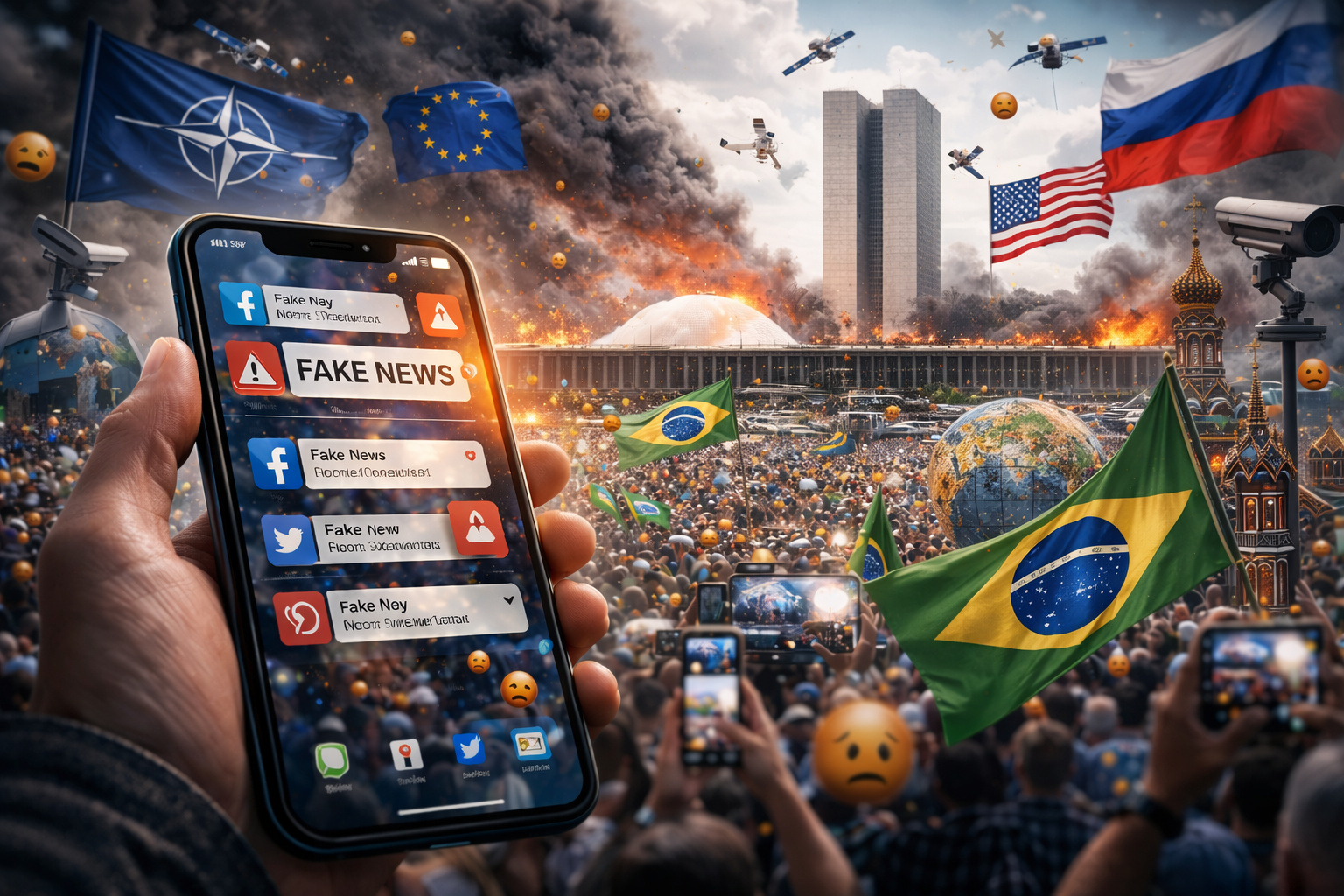
Brazil is currently experiencing a decade-long process of political and institutional destabilization, driven by planned and persistent influence campaigns and misinformation. Ursula von der Leyen, the president of the European Commission, highlighted that 21st-century conflicts start with lies and distortions of public opinion, which are evident in Brazil through social media and messaging platforms.
This “gray zone” strategy involves the manipulation of information without direct confrontation, leading to confusion, erosion of trust, and simplified narratives gaining acceptance. Misinformation spreads fear and distrust, disrupting public debate and normalizing conflict.
Domestic actors, including irresponsible influencers and politically motivated individuals, amplify these geopolitical disputes, weakening state institutions and undermining democracy. Key democratic institutions such as the electoral system and the judiciary are targeted by systematic delegitimization campaigns.
While European nations have begun organizing responses to address these challenges, Brazil’s response has been hesitant, allowing disinformation to thrive. Addressing this issue requires confronting organized disinformation, strengthening journalism, regulating digital platforms, and promoting critical education. If left unchecked, this informational instability risks eroding democracy in Brazil. The article ends by urging individuals to reflect on their stance in this ongoing crisis.
