



The article discusses the critical impact of misinformation on climate response and recovery in Pakistan, a nation highly vulnerable to climate crises like floods, heatwaves, and droughts. During extreme events, such as the 2025 monsoon floods, misleading narratives, including false claims of a “cloudburst,” overshadow scientific evidence and hinder effective governance.
A report by the Institute for Research, Advocacy and Development (IRADA) emphasizes that disinformation often spikes during climate-induced catastrophes, predominantly spreading on social media in Urdu and regional languages. It underscores that the public’s demand for accurate information during these times is often met with delays or inconsistency from officials.
Disinformation severely affects Indigenous communities, which rely on accurate data for survival. These communities face confusion regarding evacuation procedures and are often excluded from climate policymaking, exacerbating their vulnerability. The article highlights that misinformation, affecting local ecological knowledge and psychological well-being, can lead to dire consequences for these populations.
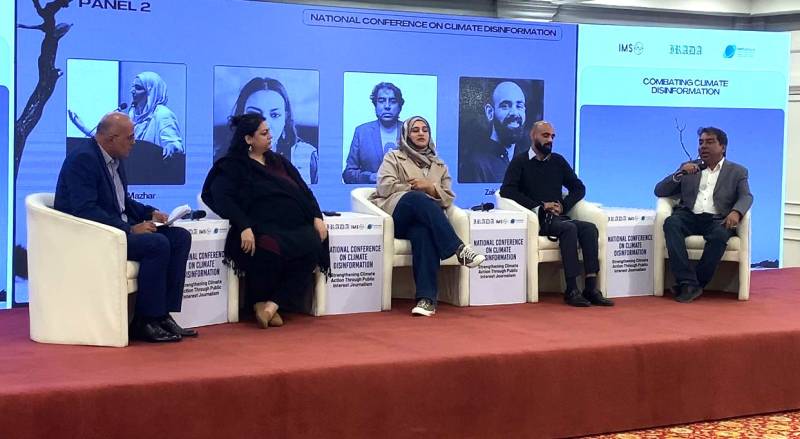
The urgency of addressing disinformation was echoed at the National Conference on Climate Disinformation, where experts argued that climate resilience cannot be achieved without truthful information and public trust. The report also cites systemic issues in climate journalism in Pakistan, where the coverage often fails to address the underlying causes of climate issues, focusing instead on immediate disasters.
Finally, the article notes a global acknowledgement of disinformation as a significant threat to climate action, pointing to a shared understanding that the fight against climate change is intrinsically linked to combating misinformation.
