



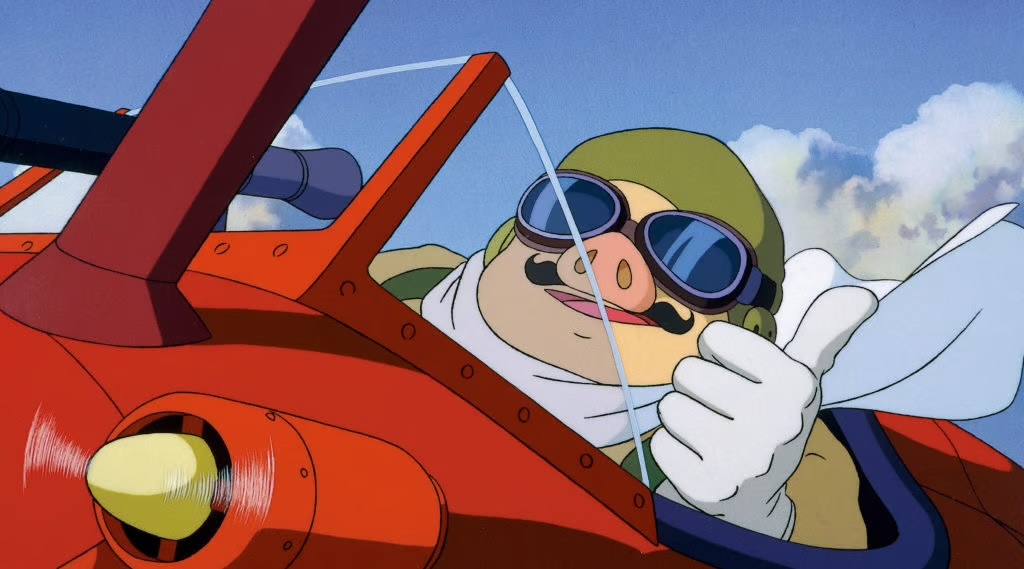
In Porco Rosso, the highly anticipated seaplane duel between the pig pilot Marco Pagot and his rival Donald Curtis unfolds with a different rhythm than expected. Instead of thrilling combat, the crowd’s eagerness is met with an examination of the banality and ugliness of violence. Through a series of subversions, the film critiques the fascist aesthetic—an emphasis on action and violence devoid of reflection—by dismantling its romanticized imagery and showcasing the less glamorous realities of being a pilot.
Directors Hayao Miyazaki utilizes the protagonist’s experiences to undermine the heroic myths associated with fighter pilots. Marco, instead of embodying a classical hero, is depicted as a financially motivated contractor who often expresses cynicism towards his dangerous profession. The film also contrasts fascist symbols with mundane realities, revealing them as hollow and dangerous.
Notably, Porco Rosso discourages violence, often depicting scenarios where conflicts are avoided or de-escalated. Marco’s greatest triumph is shown in his ability to incapacitate enemies without casualties. The Hotel Adriano, run by Gina, symbolizes a community based on coexistence and civility, representing a hopeful, non-violent future opposed to fascist brutality.
Ultimately, Porco Rosso serves as an ideological critique of fascism, offering an anti-violence narrative that stands in stark contrast to the glorified depictions characteristic of fascist aesthetics. The film suggests that a pluralistic, peaceful society is not only desirable but attainable, encouraging viewers to envision a world where such values flourish despite the pervasive threat of fascism.
