



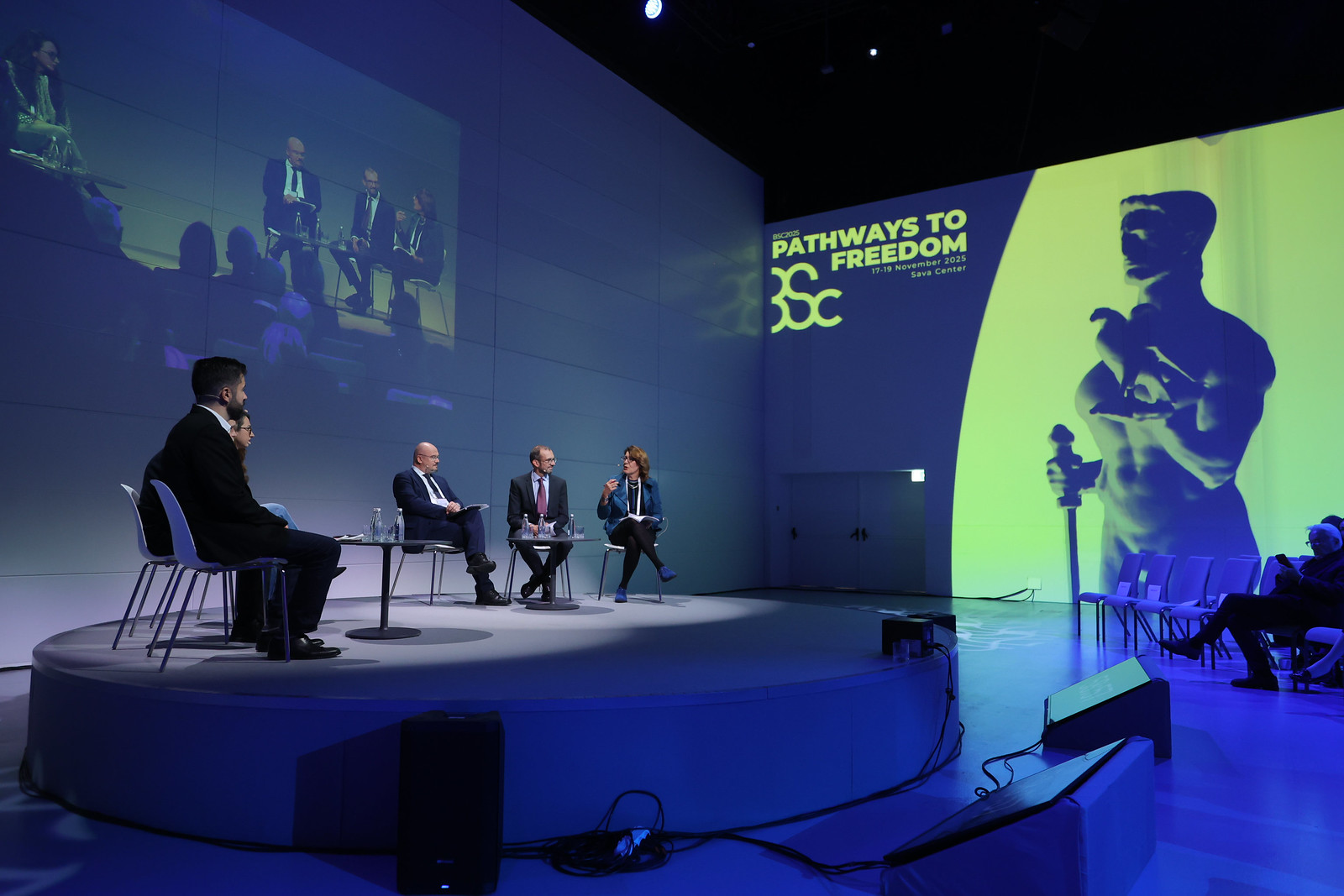
At the Belgrade Security Conference, panelists discussed the pervasive drone attacks and Russian disinformation campaigns, highlighting the ongoing “invisible wars” primarily aimed at influencing European public opinion. Stressing the rise of hybrid threats, especially during election cycles, Mihaela Sirițanu from Watchdog Moldova shared insights on Russia’s interference in Moldova’s elections through “laundered money” and the coercive tactic of cutting gas supplies.
She emphasized the importance of EU unity in countering these threats and noted the significant role of civil society, which can experience fatigue if left unsupported. Kiril Petkov, former Bulgarian Prime Minister, pointed to corruption as Russia’s main tool for infiltrating power structures in countries like Bulgaria and Serbia. He contended that Russia’s control over key resources aims to block Western investments.
Thomas Röwekamp of the German Bundestag addressed Germany’s vulnerability to Russian influence, advocating for increased military support for Ukraine and enhanced intelligence sharing among European nations. Frédéric Petit from the French Parliament stressed that the battle for democracy transcends individual nations and is vital for all of Europe.
Lastly, Enrico Borghi from the Institute of European Democrats highlighted a recent bipartisan Italian consensus on hybrid threats and the pressing need to regulate big tech, emphasizing the moral stakes involved.
