



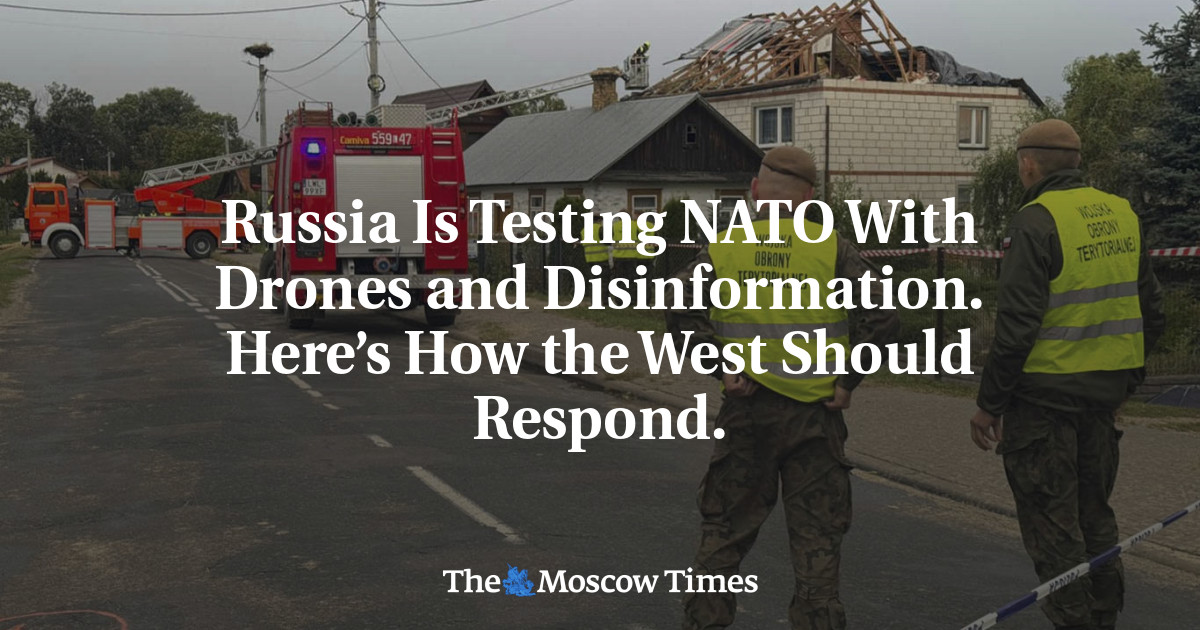
On the night of September 9–10, Russian drones violated Polish airspace, marking a clear instance of Russian aggression towards the West, accompanied by a strategic disinformation campaign from the Kremlin. This operation combined physical attacks with informational tactics like propaganda to disorient and undermine Western responses.
The Kremlin’s disinformation goals included denying responsibility for the drone attack, fostering chaos and distrust in Polish society and governance, and testing NATO’s reactions. Russian media quickly denied accountability while framing the incident as a Ukrainian provocation, with amplification from social media and domestic commentators. This tactic aimed to instill panic and sow discord, potentially undermining Poland’s support for Ukraine amidst social tensions stemming from the refugee crisis and economic challenges.
Experts stress that while criticism of Ukraine exists due to genuine concerns, it’s essential to recognize that Russia exploits these tensions for its own narratives. Despite persistent pro-Ukrainian sentiment in Poland, the drone incident illustrates how Russian narratives can penetrate Western political discourse, especially if unchallenged.
To counter this hybrid aggression, experts recommend systemic changes in defense and improved resilience in both governance and society. Solutions include bolstering military cooperation within NATO, reinforcing sanctions on Russia, and amplifying support for Ukrainian efforts both militarily and informationally. Legislation aimed at combatting disinformation, especially online, is also deemed critical. Ultimately, the article emphasizes that democratic states must actively defend against Russia’s use of disinformation as a weapon of war.
