



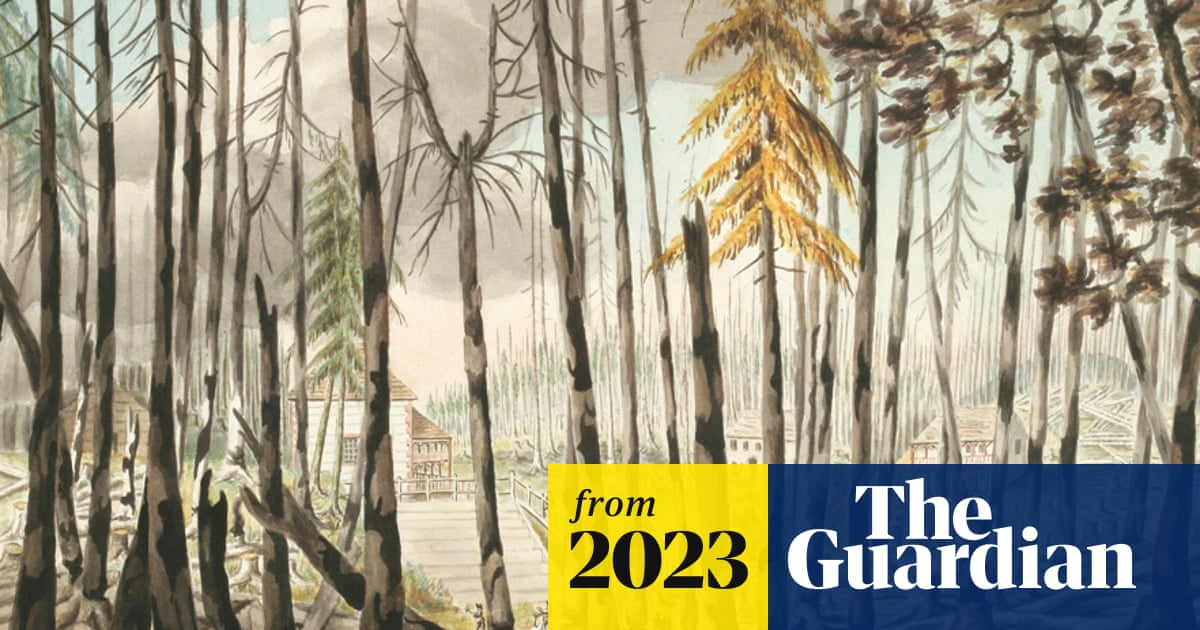
Dr. Wendy Nālani E Ikemoto curated the exhibition Nature, Crisis, Consequence at the New-York Historical Society to explore the connections between the climate crisis and socio-cultural issues. The show contrasts 19th-century American naturalism with contemporary works from marginalized communities, aiming to illustrate that the environmental crisis is intertwined with civil rights issues. Ikemoto was asked to showcase the popular Hudson River school paintings, known for their romanticized landscapes now altered by human development.
To provide context, she surrounded classic works, like Albert Bierstadt’s Donner Lake from the Summit, with art from artists such as Indigenous artist Ben Pease and contemporary painter Oscar yi Hou, highlighting the communities impacted by historical events like the building of the transcontinental railroad. This juxtaposition emphasizes a depopulated view of landscapes and aims to reinsert the stories of displaced Indigenous people and Chinese workers.
The exhibition also addresses the complex history of Central Park, revealing its establishment on the lands of Black, German, and Irish communities. Ikemoto points out that the park’s creation contributed to the disenfranchisement of a significant portion of New York’s Black population at the time. The exhibition includes maps and narratives shedding light on figures like Elizabeth A Gloucester, a wealthy Black woman who played a crucial role in American history.
Ikemoto, who identifies as part Native Hawaiian, sees her role as a curator of color as vital for increasing visibility in the art world. She hopes the exhibition encourages audiences to understand the links between history, civil rights, and the climate crisis. Ultimately, Ikemoto argues that correcting historical narratives—by including diverse stories—is essential for accurately reflecting America’s past and present.
